Monday, 28 March 2022

Join The Coffee Pot Book Club in conversation with #HistoricalFiction author, Alistair Tosh. There is also a chance to check out Alistair's fabulous novel - Siege (Edge of Empire, Book One) @alistair_tosh @SharpeBooks


Siege
(Edge of Empire, Book One)
By Alistair Tosh


Publication Date: 16th February 2022 
Publisher: Sharpe Books
Page Length: 426
Genre: Historical Fiction / Ancient Rome

AD 139.

Lucius Faenius Felix arrives in Britannia to command the First Nervana, a renowned cohort drawn from the homelands of the fierce Nervii tribe. The soldier has been recently cheated out of his ancestral estates - and is still grieving the mysterious murder of his father.

Along with Cai Martis, a veteran cavalry Prefect, the young officer uncovers news of a conspiracy. The resurgent Novantae, a ferocious tribe, led by the determined war-chief, Barra, aim to put the Romans to the sword and win back the province.

Surrounded and cut off by their enemies, Lucius and Cai must lead their cohort through hostile territory. Conquer or be conquered.

The Romans attempt to send a message through enemy lines.

The First Nervana make a desperate final stand behind the walls of their fort.

Did the message get through?

Lucius and Cai know all too well what is at stake. Victory or death.


Mary Anne: Congratulations on your debut novel, Siege (Edge of Empire Book 1).  Could you tell us a little about your new book and what inspired you to set your story in the Ancient World?

Alistair: Thanks Mary Anne, I’m delighted to feature on the Coffee Pot. I'm a regular reader.

My debut novel Siege is the first of a trilogy. It is an historical adventure set in the wilds of second century northern Britannia. At its heart is the relationship that develops between two men. Lucius Faenius Felix, an inexperienced Roman Tribune, of the patrician class, given command of the First Nervana, a Germanic auxiliary cohort. The other, Cai Martis, is a grizzled, veteran cavalry Prefect and warrior of the Nervii tribe. Their story takes them through bloody, terror filled battles against the tribes of the north. Lucius’s ordeals will ultimately transform him from callow youth to a battle-hardened war leader with dreams of recovering his lost family lands. Cai, feeling his mortality as his time with the Nervana nears its end, seeks the love of the beautiful and strong-willed Alyn, widow of his childhood friend. But, as the fearsome Novantae tribe and their allies sweep across the land once more, threatening the province, both men must stand their ground in a final desperate battle that will mean victory for the Nervana or its destruction.

In terms of what inspired me, I've had bits of the story in my head for years. As a lad growing up in the countryside of Dumfriesshire in southern Scotland I regularly visited Burnswark Iron Age hillfort on my bike. I saw the remains of the two Roman siege forts and the grass-covered mounds of the ballista platforms, called the Three Brethren locally. I wondered what it must have been like for the defenders in what was surely a brutal, terror filled, battle. But it was my research into the likely events and the political backdrop to it, that really highlighted where the story lay.

Mary Anne: When researching this era, did you come upon any unexpected surprises?

Alistair: Yes, quite a few, but two in particular. Firstly I always understood that the Roman army’s way of carrying out warfare was brutal and aimed at the total subjugation of its enemies. But what I hadn’t truly realised was the way in which it used fear, and even psychological warfare, as a weapon long before they closed in for hand to hand fighting. This is clearly shown at the battle for Burnswark. The largely unarmoured warriors of the local tribe faced a barrage of thousands of lead sling bullets that had the same hitting power as a modern handgun. There were smaller versions that had holes drilled into their sides that buzzed like angry wasps when slung. Fist sized, anti personnel, stone ballista balls and many arrowheads and deadly accurate scorpion bolts were uncovered at the site too. The tribesmen must have spent most of the battle lying, terrified, with their faces pressed into the soft earth of the hill’s summit. 

The second is the use of cavalry. Most often when we consider the Roman army in Britannia we think of the legions or the auxiliary infantry standing watch on Hadrian’s Wall. But in reality it was the cavalry units that did much of the day to day work. They were highly mobile, making them effective on patrols and as scouts north of the Wall. They made speedy messengers, giving warning of sudden threats and incursions. They also ensured food security, protecting local farmland and guarding supply trains, and not to forget helping in the collection of taxes from local chieftains. They simply kept the peace.

I have tried to reflect both elements accurately in Siege.

Mary Anne: Why do you think this period in history is still really popular with readers?

Alistair: I think it’s because the period is filled with famous historical characters that fire our imaginations. But it is also a period that has many gaps in our knowledge and understanding that allows an author to fill in with good stories. Take the Antonine Wall in Scotland for example. Built by the Romans and 36 miles long between the river Clyde and the Firth of Forth. We know almost nothing about the campaign that led up to its construction, other than what has been uncovered in the archaeological record.

Mary Anne: What do you think is the most challenging aspect of writing Historical Fiction during this era?

Alistair: For me it was getting the descriptions of things as close to reality as possible. What was the land like nearly two thousand years ago? Was it forested or had the land been cleared for agriculture? What was it like to live in an auxiliary fort for a soldier and what did the civilian settlement below its ramparts look like? Lots of questions that research can only partly answer.

Mary Anne: Does one of the main characters hold a special place in your heart? If so, why?

Alistair: Yes for me it is Lucius. He did in fact exist and was the Tribune of the First Nervana Germanorum. An altar stone raised by him to the god Jupiter on behalf of his cohort was found built into the wall of a small church near to Birrens fort. In the story Lucius is an inexperienced youth, but in reality was almost certainly a seasoned veteran. But even so, for a Roman of the patrician class to take command of a regiment filled with Germanic tribesmen, recruited from the Nervii tribe in what is now central Belgium, must have taken some nerve and would have presented considerable challenges on the edge of the Roman world. 


Siege is only 0.99 on #Kindle for a limited time.

This novel is free to read with #KindleUnlimited subscription. 


Alistair grew up in the Dumfriesshire countryside for most of his childhood. A region of southern Scotland filled with ancient place names such as Thorthorwald and Caerlaverock. But it was his visits as a boy to the site of Burnswark hill and hearing the tale of the Roman siege of the Iron Age fort that fired his love of Roman and Dark Ages history. From there the kernel of the stories for the Edge of Empire took root.

On leaving school he began a 35-year communications career. Firstly with the Royal Navy, that included covert riverine and seaborne operations during the height of 'The Troubles' in Northern Ireland, before moving into the corporate world. Military life is unique, and Alistair aims to reflect an authentic view of that experience and its language in his stories. When not writing or spending time with family, Alistair, his wife Jenny and Hurley the cockerpoo love to walk in the hills of both the UK and Andalucia.

Connect with Alistair:


Friday, 25 March 2022

Check out The Sunday Times Bestselling Novel from literary legends, Isabel Allende #HistoricalFiction


Violeta

By Isabel Allende
 

Publication Date: 25th January 2022
Publisher: Bloomsbury Publishing; 1st edition
Page Length: 319 Pages
Genre: Historical Fiction

One extraordinary woman.
One hundred years of history.
One unforgettable story.

Violeta comes into the world on a stormy day in 1920, the first daughter in a family of five boisterous sons. From the start, her life is marked by extraordinary events. The ripples of the Great War are still being felt, even as the Spanish flu arrives on the shores of her South American homeland almost at the moment of her birth.

Told in the form of a letter to someone Violeta loves above all others, this is the story of a hundred-year life – of devastating heartbreak and passionate affairs, poverty and wealth, terrible loss and immense joy. Bearing witness to a century of history, it is a life shaped by the fight for women's rights, the rise and fall of tyrants and, ultimately, not one but two pandemics.

Through the eyes of a woman whose unforgettable passion, determination and sense of humour will carry her through a lifetime of upheaval, Isabel Allende once more brings us an epic that is both fiercely inspiring and deeply emotional.


'Epic, beautifully crafted . . . Gripping from start to finish' 
Daily Telegraph

'A moving exploration of both the pain and the freedom of being an outsider' 
New Statesman

'A new novel by Isabel Allende is always a treat' 
Daily Mail


Born in Peru and raised in Chile, Isabel Allende is the author of The House of the Spirits, Daughter of Fortune, Paula, My Invented Country and The Japanese Lover. Her books have been translated into more than 35 languages and have sold over 65 million copies worldwide. The Japanese Lover was an international and New York Times bestseller. She lives in California.


Thursday, 24 March 2022

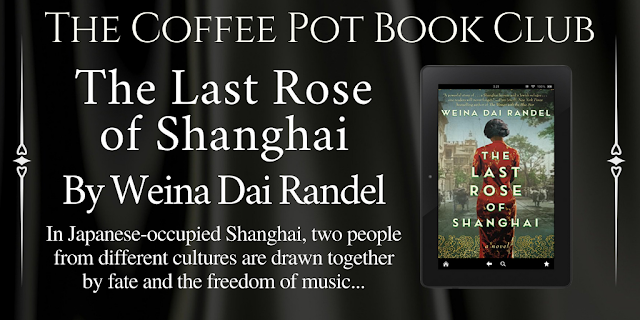
Books to read in 2022 - The Last Rose of Shanghai by Weina Dai Randel #HistoricalFiction #MustRead @WeinaRandel


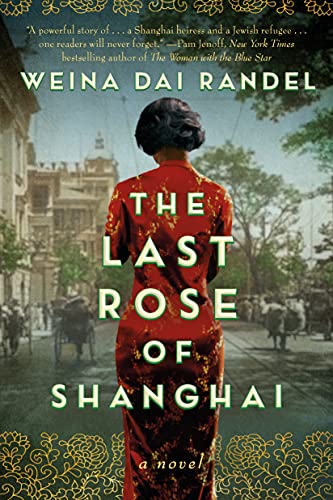
The Last Rose of Shanghai

By Weina Dai Randel


Publication Date: 1st December 2021
Publisher: Lake Union Publishing
Page Length: 429 Pages
Genre: Historical Fiction

In Japanese-occupied Shanghai, two people from different cultures are drawn together by fate and the freedom of music...

1940. 

Aiyi Shao is a young heiress and the owner of a formerly popular and glamorous Shanghai nightclub. Ernest Reismann is a penniless Jewish refugee driven out of Germany, an outsider searching for shelter in a city wary of strangers. He loses nearly all hope until he crosses paths with Aiyi. When she hires Ernest to play piano at her club, her defiance of custom causes a sensation. His instant fame makes Aiyi's club once again the hottest spot in Shanghai. Soon they realize they share more than a passion for jazz—but their differences seem insurmountable, and Aiyi is engaged to another man.

As the war escalates, Aiyi and Ernest find themselves torn apart, and their choices between love and survival grow more desperate. In the face of overwhelming odds, a chain of events is set in motion that will change both their lives forever.
From the electrifying jazz clubs to the impoverished streets of a city under siege, The Last Rose of Shanghai is a timeless, sweeping story of love and redemption.

"Weina Dai Randel's poignant, sweeping love story paints a vibrant portrait of a little-known slice of World War II history. Not to be missed!"

Kate Quinn, New York Times bestselling author of The Rose Code and The Huntress

"A powerful story of the relationship between a Shanghai heiress and a Jewish refugee...one readers will never forget."

Pam Jenoff, New York Times bestselling author of The Woman with the Blue Star

"A must-read for historical fiction lovers. Filled with page-turning suspense and a poignant and unforgettable love story, Weina Dai Randel wholly immerses the reader in this richly detailed and powerfully drawn story."

Chanel Cleeton, New York Times and USA Today bestselling author


Read this novel for free with #KindleUnlimited subscription


WEINA DAI RANDEL is the award-winning author of historical novel series The Empress of Bright Moon, historical novels about the first female emperor Wu Zetian in China. The first novel, The Moon in the Palace, was the winner of RWA RITA® Award in 2017, Goodreads Choice Awards nominee and a RT Book Reviewers Choice Award nominee. It was called one of the “most beautifully written, impeccably researched and well-constructed historical fiction novels released this year” by Book Reporter, named as one of the Biggest Historical Fiction books of 2016 by Bookbub, and recommended by Texas Library Association’s 2017 Lariat Reading List.

The two novels have been translated into 7 languages and sold worldwide.

Weina was born and raised in China. English is her second language. She first studied English in middle school in China and came to the U.S. at the age of twenty-four. She holds an M.A. in English from Texas Woman's University in Denton, Texas. It took her ten years to research and write The Moon in the Palace. Find more about Weina on her website.


Wednesday, 23 March 2022

Join #HistoricalFiction author, Vivienne Brereton, as she explores the difficulty with names in the Tudor period #amwriting #Tudors @VivienneBreret1


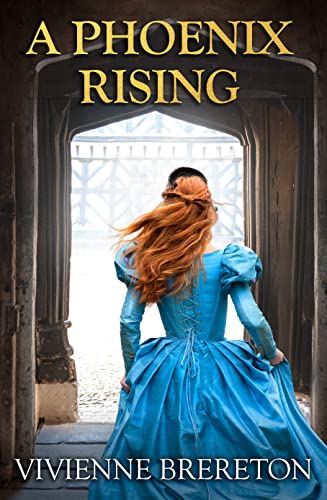
A Phoenix Rising

(The House of the Red Duke, Book 1)
By Vivienne Brereton 


Publication Date: 8th July 2019
Publisher: Yuletide Press 
Page Length:  374 Pages
Genre: Historical Fiction

The Howards have it all! Wealth, power, brains and beauty. Not to mention, physical prowess, charm in abundance, and the favour of a king. But then the unthinkable happens. They lose everything overnight. In a catastrophic reversal of fortune. How?


1485. Bosworth Field. Loyally backing a Yorkist king over a Tudor usurper (who wins the day) costs the family very dear. The head of the Howards is killed alongside his king, while his disgraced son is flung into the Tower for three long years.


Meet Thomas Howard, Earl of Surrey. Proud father of three strong sons, two beautiful daughters, and grandfather to two of Henry VIII’s future wives. Soldier. Statesman. Courtier. Keeper of secrets hidden behind castle walls. Heady places of intrigue and lovers’ trysts.


Once freed, Thomas vows to regain his position at the prosperous court of Henry VII, like a phoenix rising from the ashes. And restore the Howard family, formerly one of the most powerful in England, to its former glory.


“If I have anything to do with it, we Howards will live forever.”


The magnificent royal courts of Europe provide a sensual backdrop for innocent first love and passionate love affairs, alongside arranged noble marriages. Meanwhile, hidden danger, revenge, and ruthless ambition stalk the candlelit corridors.


Be dazzled by the dancing, drama and display in Tudor England, Stewart Scotland, Valois France, and The Habsburg Empire. Feast in the great halls and enjoy the delicious fare. (Recipes included!) Many names will be familiar: Katherine of Aragon, Thomas Wolsey, Anne and Mary Boleyn, Charles Brandon and Thomas More. Some less so: Louis XII and François de Valois of France.


Plans are equally likely to be drawn up for a bloody war, as for an extraordinary event such as the fabled 1520 Field of Cloth of Gold.


1509. After their calamitous period of disgrace, the Howards are once more riding high at the glittering court of a young Henry VIII due to Thomas’s intelligence and perseverance, and the part played by his middle son, Edward, a royal favourite known for his pleasing appearance, swagger and daring.
Thomas’s travels take him down to Cornwall, up to Scotland, and across the Narrow Sea separating England from France. Mystery swirls around the lives of four young people: Tristan, Cecily, Valentine, and Nicolas.


But there are no secrets that time does not reveal….


A Tudor Rose by any other name…
 By Vivienne Brereton


The advice for writers, especially those writing historical fiction, is to choose the first names of your characters with care, making sure that they are of their era, and not another. And not to use the same name twice. This works well but what happens when your novel is a blend of fact and fiction, as is the case with ‘The House of the Red Duke’. I needed to choose fictitious names hailing from England, Scotland, and France which caused no problem and was quite fun. However, things became tricky when I was writing about real characters from the early Tudor period. As Chris Laning points out in his excellent article on names in Elizabethan England, the Tudor name pool was exceedingly small compared to the one we use today to name our children.

Picking the names of saints as suitable choices back then perhaps corresponds to the recent official permitted register of names that used to exist in many countries today. I experienced it first-hand when I had a baby in Germany before the rules were relaxed, happy that being British meant I was exempt from the official book of German names. Just as well because a glance at another mother’s book soon showed me that both my new son’s names were forbidden! It is no surprise to find an Apple, a Saint, or a Harper in our modern world, but in the Tudor era, there were probably only about 30 to 40 first names in circulation. There were almost no middle names, a tradition which was spreading slowly in countries across the so-called Narrow Sea, but did not reach English speaking countries until as late as the nineteenth century. So sadly no Henry Junior or Annie-B ( Boleyn) to make my life easier.

In my case, in the first part of my novel, I was left with two Henries and three Thomases, with no real way of distinguishing between them. More on that later, but first here is a glimpse at what the 1519 name chart might have looked like compared to today. As you can see, neither the 2019 American boys or girls lists give much of a nod to the Tudors, apart from James, for the boys, and Emma (in the Tudor top 50) and Isabella for the girls. The UK have Charles, James and Henry covered (albeit in shortened forms), as well as George. Arthur has made it into the Top Ten. In Tudor times, Henry VII’s first-born son, Prince Arthur was deliberately named to link him in people’s minds with both the legend and Wales. The UK girls have the solitary Isabella carrying the green and white Tudor mantle.


US Boys 2019
US Girls 2019
UK Boys 2019
UK Girls 2019
Tudor England Boys 1519
Tudor England Girls 1519
1
Liam 

Olivia
Muhammad 
Olivia
John
Mary/Marie
2
Noah

Emma
Noah
Sophia
Thomas
Elizabeth
3
Elijah

Ava
George
Lily
William
Jone/Jane/Joan
4
Oliver

Sophia
Oliver
Ava
Richard
Margaret/Margery
5
Lucas

Isabella
Charlie
Mia
Henry
Ann/Anne
6
Mason

Amelia
Harry
Isla
Edward
Agnes
7
Ethan

Mia
Leo
Amelia
Ralf/Ralff
Alice/Alis
8
Logan

Charlotte
Arthur
Freya
George
Joanna/Johanna
9
Aiden

Harper
Jack
Isabella
Robert
Susan
10
James

Luna
Freddie
Emily
Humfrey
Annis
  

I have to thank Amy Licence for the Tudor list, and although I have written 1519 because it dovetails so nicely with our own time, and with the time of my book, as Amy points out, the same names “continued to be murmured over the baptismal font” throughout the Tudor era, in a different order in the list, and with different spellings, depending on the parish clerk.

If you think about it, two of Henry VIII’s wives were called Anne, three Catherine, and one Jane. That’s not a great deal of variety. You can imagine a whispered Tudor conversation out of reach of potentially treacherous ears. “Do you mean Anne who lost her head? Or Anne who lost her crown? Katherine who lost her crown, Catherine who lost her head or Katherine who managed to survive?” Thank goodness for different spellings.

In my novel, we have Anne Boleyn’s father, Thomas, Anne’s uncle, Thomas, and Anne’s grandfather, Thomas. Coming a close second after England’s patron saint, George, Thomas Becket, a martyr-saint, was very popular and gave his name to (far too?) many a Thomas.

So, how did the Tudors choose their names? And why?

In his book, ‘Names and Naming Patterns in England, 1538-1700’, Scott Smith-Bannister examined the baptism records of forty parishes, spread right across England. He discovered that the popularity of names could be affected by geographical region and social status. Not only did baby names follow family tradition by using the father or grandfather’s name, a grandmother, aunt or uncle, but in an age of high mother and infant mortality, the same name was often re-used. Over the Narrow Sea in France, Guillaume Gouffier, Admiral of France (who also makes an appearance in the novel), was so enamoured of his monarch François I that he named all three of his sons, François. How confusing would that be in a household? “It wasn’t me, Mum. It was François!”

An interesting point here is that I included Alison Weir’s Thomas Boleyn as the heir to the Boleyn inheritance, “whose grave in Penshurst Church, Kent, is marked by a cross and the date 1520.” It made sense to me that an ambitious man like Thomas Boleyn, or “Bullayne” as she calls him (again the free choice of spelling) would want to continue the tradition of naming his first born son after him. So Thomas (called Tom) is in my novel, along with his younger brother, George.

According to Scott Smith-Bannister, names of godparents were also favourites to be chosen: two women and a man if you were a girl; and two men and a woman if you were a boy. It helped if the godparent in question was higher in status, rich and famous. Elton or Melania anyone?
If you were named after someone, you would be called ‘namesakes’.

A brief word on Tudor surnames.

Adams. Andrews. Child. Gascoigne. Grey. Spicer etc; Far more of those than first names, of course. The interesting thing about surnames is that they were not quite as fixed as first names. So, for the lucky few, for example, you might inherit a castle and a title, and you would change your surname accordingly. Robert Dudley, Earl of Leicester, Elizabeth I’s favourite, was born a Sutton, but became Dudley after being gifted the Dudley lands.

You might be known by your local village or profession such as Baker. If there were several villagers with the same name, you might be distinguished by your appearance or place. John Little, Lame John or John Chester. My surname, Brereton, is an old Cheshire, Staffordshire or West Yorkshire name. It is also a civil parish in Cheshire. And with a surname like that, a famous ancestor of mine might well have been William Brereton, executed in May, 1536 by Henry VIII for supposed ‘adultery’ with Anne Boleyn. Honestly, those Tudors….

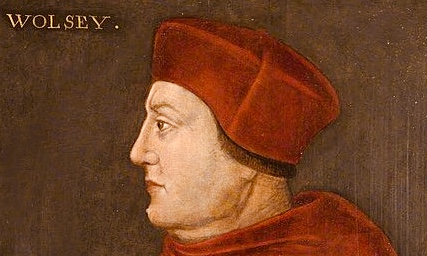
Finally… So how did I solve my own problem with three Thomases and two Henries in Part One of my book? Namely, Henries VII and VIII; and Thomases, Howard, Wolsey and More. 


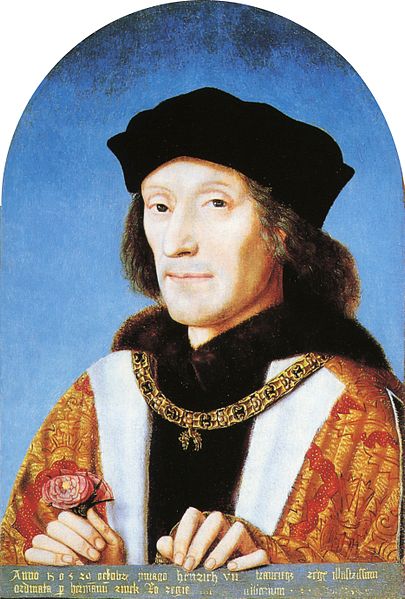
Henry VII


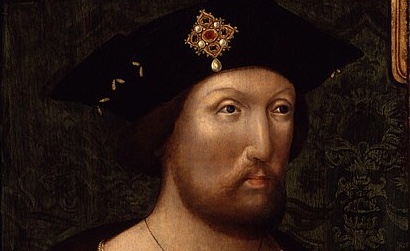
Henry VIII


Thomas Wolsey.

Thomas More.

A friend of mine read an early draft and unsurprisingly found the repetition rather confusing – hence the advice to use different names in any book on how to write historical fiction. Although I’d already shortened Thomas to Tom in the case of More and Wolsey, I saw it wasn’t enough. It came in handy that the central character, Thomas Howard, a grand old man of nearly eighty, didn’t suffer fools (or those who stood in his way) gladly so I came up with the idea of his using rather unkind nicknames. From then on, Henry VII who’d had Thomas thrown in the Tower (after Bosworth Field) became ‘Goose’. As for Henry VIII’s loyal servant, Thomas Wolsey, he was the upstart who definitely put Thomas Howard’s long nose out of joint when he “first slithered into the service” of Henry VIII. He became ‘Snake’, and I only hope it has made all my Thomases and Henries easier to follow. It certainly simplified matters for me.
This novel is free to read with #KindleUnlimied subscription.


Born between historic Winchester and Southampton in the UK, I have been passionate about the Tudors for as long as I can remember. This led to a degree in Medieval History at university, and the growing desire to write a novel.

However, life took over somewhat and only after stays, short and long, in six countries I called home did I finally settle down to finish my novel.

Words have always played an important part in my life, whether it’s been writing, editing, teaching English, or just picking up a good book. In preparation for my Tudor series, I did an enormous amount of research. I also visited most of the places in the novel, seeing it as an opportunity to step back in time, and use all six senses to reproduce life as it really was back then.

Having three sons came in very handy when I had to write about squabbles between Nicolas and Tristan. Not so handy when I took my boys to Hampton Court and one of them got lost in the maze! I also used the men in my life as guinea pigs for my Tudor cookery attempts (recipes included) with varying degrees of protest (abuse)!

Seeing ‘A Phoenix Rising’, the first book in the series ‘The House of the Red Duke’ in print for the first time was a moment of great joy for me. I hope anyone reading it will enjoy the end result as much as I enjoyed writing it.


Connect with Vivienne: Website • Blog •  Twitter • Goodreads