Monday, 18 July 2022

Have a sneak peek between the covers of M J Porter's fabulous novel — Cragside: A 1930s murder mystery #HistoricalFiction #BlogTour @coloursofunison


Cragside: A 1930s murder mystery
By M J Porter


Publication Date: 14th April 2022
Publisher: M J Publishing
Page Length: 234 Pages
Genre: Historical Mystery

Lady Merryweather has had a shocking year. Apprehended for the murder of her husband the year before, and only recently released, she hopes a trip away from London will allow her to grieve. The isolated, but much loved, Cragside Estate in North Northumberland, home of her friends, Lord and Lady Bradbury, holds special memories for her.


But, no sooner has she arrived than the body of one of the guests is found on the estate, and suspicion immediately turns on her. Perhaps, there are no friendships to be found here, after all.


Released, due to a lack of evidence, Lady Ella returns to Cragside only to discover a second murder has taken place in her absence, and one she can’t possibly have committed.


Quickly realising that these new murders must be related to that of her beloved husband, Lady Merryweather sets out to solve the crime, once and for all. But there are many who don’t want her to succeed, and as the number of murder victims increases, the possibility that she might well be the next victim, can’t be ignored.


Journey to the 1930s Cragside Estate, to a period house-party where no one is truly safe, and the estate is just as deadly as the people.


Chapter 1


Rain thuds onto the black roof of the Rolls Royce Phantom, but that doesn’t concern me. No, my eyes are drawn to the flurry of activity taking place around the main door of Cragside house, despite the sheeting rain that makes everything appear elongated and out of focus. I can see little despite my best efforts. 


What’s happened now? I want nothing more than to luxuriate in the Turkish bath complex with its beautiful blue tiles, soaking away the stink of the local police station at Rothbury, but that isn’t about to happen. Not if the bustle I’m witnessing is anything to go by.


Eagerly, not waiting for my chauffeur, Williams, to open the door, I swing it outwards, noticing how my sleeve darkens beneath the deluge, able to hear the hub of conversation as I skip over the gravel driveway. My red driving shoes are drenched between one heartbeat and the next. I can already feel the leather chaffing my cold feet. I hadn’t precisely been dressed for a cold and draughty police station when I was led away in handcuffs the night before.


Now I wear Williams’ overcoat over my sensible travelling clothes of a green skirt and thick stockings. My favourite blue coat and hat are still on the coat and hat stand. I was given no chance to put them on before being made to leave the house.


I’ve been gone for much of the day—darkness shadows even the brightest of the light pouring through the open doorway.


“My Lady,” a startled housemaid meets my gaze, bowing and curtseying all at the same time as we almost collide. I don’t get so much as the chance to ask what’s happened. She runs past me, a dark coat flung over thin shoulders, covering the smart black dress and white pinafore she wears. Her frightened eyes, hollowed by her short-cropped hair and pale face, reinforce my belief something is badly amiss.


Hastily, I stride into the sheltered stone alcove, grateful to be clear from most of the rain. I wince as I step into a puddle that hadn’t been there on my arrival the day before, cresting the flat and wide stone steps. Above my head, the weight of the house, cast almost into darkness, is telling. Chill water from the puddle slips over wet shoes and onto my cold skin. The rain is streaming at an angle, able to sneak into the stone alcove, whereas normally, it would do no such thing.


Bright lights welcome me into the house, for all the large double wooden doors hang entirely open, the trickle of flowing water attesting to the direction of the biting north wind even through my borrowed overcoat. I don’t want to consider the state of my hair, and I’m not even a vain woman.


I can see into the far reaches of the well-appointed property from my location. And there, the activity comes to an abrupt stop. There’s no one inside, not even the efficient butler, Mr Underhill. I can hear no noise from the kitchen. No noise from the dining room. Nothing at all. Can the upright Mr Underhill be out in the rain? I hardly dare think he’ll risk getting his immaculately shined shoes muddied. And if he has, then it’s indeed some new catastrophe that’s befallen the inhabitants of Cragside.


So then, where are the remainder of the weekend guests? Where are those who’d been so keen to see me sent away, slim hands held cuffed before me as the police smirked at having caught the culprit so easily? I turn, the pull of the unknown too much to ignore. I wish there were a handy torch to light my path into the impenetrable dusk that beckons to me.


The rumble of another motorcar outside pulling onto the gravel-strewn drive with the distinctive crunch beneath the thin tyres is all I need to hear. I swivel. All thoughts about luxuriating in the Turkish bath complex are forgotten. I need to see. I have to know.


As I  hope, the other motorcar has been brought alongside that of my Rolls Royce Phantom, Williams still inside and just about visible behind the rain-soaked windscreen. Now both vehicles’ thin, yellow beams attempt to drive back the mizzle and the gloom. I’ve experienced rain like this before on very few occasions. Williams warned me when I mentioned our destination was the far North-East of England in November, but well, I didn’t believe it could be so torrential.


I step outside once more, pulling the hood of Williams thick woollen coat over my head, wishing for an umbrella. I meet Williams’ eyes through the fogged-up interior of the car. I incline my head questioningly, but he shakes his. I’m not the only one to be unaware of what’s happening.


Carefully, wary of the deep ravine that lies below me if I take a wrong step, I make my way to where the beams of the two vehicles are being directed. There are yellowed glimmers from small torches, and an amber glow spills from the curtains of the study and the staircase. Still, it isn’t enough to truly see the focus of everyone’s attention. I consider the time. It can only be just after 4 pm. The blackness of the storm shocks me.


Amazon UK • Amazon US • Amazon CA • Amazon AU • Barnes and Noble • Waterstones • Kobo • Apple Books • Audio


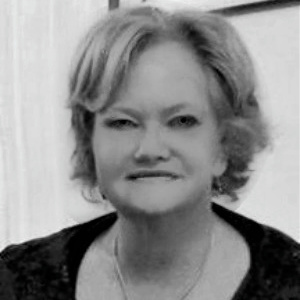
MJ Porter is the author of many historical novels set predominantly in Seventh to Eleventh-Century England, as well as three twentieth-century mysteries. Raised in the shadow of a building that was believed to house the bones of long-dead Kings of Mercia, meant that the author's writing destiny was set.

Connect with MJ Porter:

Website • Blog • Twitter • Facebook • LinkedIn • Instagram • Pinterest • BookBub • Amazon Author Page • Goodreads • LinkIn


Tuesday, 12 July 2022

Join #HistoricalFiction author, Amy Maroney, as she talks about the inspiration behind her fabulous novel - The Girl from Oto (The Miramonde Series, Book 1) #Renaissance #WomenArtists @wilaroney


The Girl from Oto
(The Miramonde Series, Book 1)
By Amy Maroney


Publication Date: September, 2016
Publisher: Artelan Press
Page Length: 520 Pages
Genre: Historical mystery

A Renaissance-era woman artist and an American scholar. Linked by a 500-year-old mystery…

The secrets of the past are irresistible—and treacherous.

1500: Born during a time wracked by war and plague, Renaissance-era artist Mira grows up in a Pyrenees convent believing she is an orphan. When tragedy strikes, Mira learns the devastating truth about her own origins. But does she have the strength to face those who would destroy her?

2015: Centuries later, art scholar Zari unearths traces of a mysterious young woman named Mira in two 16th-century portraits. Obsessed, Zari tracks Mira through the great cities of Europe to the pilgrim’s route of Camino de Santiago—and is stunned by what she finds. Will her discovery be enough to bring Mira’s story to life?

A powerful story and an intriguing mystery, The Girl from Oto is an unforgettable novel of obsession, passion, and human resilience.


In The Girl from Oto, a baby is born into a cruel and violent noble family; her mother names her Miramonde, ‘one who sees the world.’ Raised in a convent, Mira becomes an extraordinary artist—never dreaming she will one day fulfill the promise of her name.

Mira’s modern-day counterpart, Zari Durrell, is a young American scholar doing research in Europe who discovers traces of a mysterious woman artist in several sixteenth-century paintings. Soon she’s charting a path through history to Mira herself—but the art world ignores her findings, dazzled by a rival academic’s claim that the portraits were in fact made by a famous male artist.

I never set out to write this story when I embarked on the adventure of a lifetime a decade ago. In fact, I was writing an entirely different novel at the time—a pharmaceutical thriller I call The Sunscreen Caper—which is now tucked away, gathering dust.

But during travels with my family in Europe all those years ago, I struggled to make centuries-old portraits by Old Masters relevant to our two young daughters. I wished there were women painters to serve as examples for them. Then I was lucky enough to visit Oxford University. 


Caterina van Hemessen


At Magdalen College, I stumbled across a sixteenth-century portrait of a woman that was attributed to a female artist, Caterina Van Hemessen. After visiting museums full of Renaissance-era portraits and learning about art history as a college student, I had somehow never heard of female Old Masters. But now, before my own eyes, was evidence that there were women painters in those days. 

Around the same time, a friend saw 17th-century painter Artemisia Gentileschi’s work in a Paris museum and gave me some information about her. I was hooked. I soon learned that because women’s work wasn’t valued, their paintings were often attributed to men or kept anonymous. I became obsessed with the lost stories of these women artists—and I resolved to write a novel on the topic. 


Artemisia Gentileschi painting.

Visiting the Pyrenees soon after seeing the portrait at Oxford, I found my setting and my heroine. Our family stayed in a restored medieval tower on the edge of Ordesa National Park in Aragon, Spain, and I knew this was where Miramonde de Oto’s story would begin. 

As I dove into research, I got seriously obsessed with the medieval wool trade in Spain; the wealth created in Toulouse by the blue dye made from the humble woad plant; the independent communities of the Pyrenees, which self-governed during the era of feudal societies; and the clash of paganism and Catholicism in those mountains. 


Ordesa National Park photo by Gustavo Naharro.

Winding their way through this history were the pilgrims who journeyed along the Camino de Santiago to Compostela despite all the dangers. And then there were Basque fishing and whaling traditions and the mysterious people known as the Cagots. My original idea for one novel expanded into a trilogy as I developed my plot and characters.

As I studied forgotten women artists and their work, I developed a fascination with the field of art conservation. Using X-rays and other tools, researchers can now see under the layers of paint in a portrait, determine the age of a wooden panel, and more. We used to rely solely on the ‘eye’ of an art expert to determine who actually painted a portrait. But today, science can debunk the opinion of an expert and reveal secrets within paintings. 

For me, this knowledge made a dual narrative critical to the story. I wanted a modern-day female historian, an outsider in both the academic and art worlds, to discover a hidden female artist using these high-tech research methods. I read a lot and relied on the expertise of art conservation professionals who gave generously of their time and resources to help me. Still, each time I sat down to write about modern heroine Zari Durrell’s efforts, I felt like was studying for a college exam. I would pore over the technical material and then, over painstaking hours, translate it into a compelling scene. 


Since The Girl from Oto was published in 2016, more women artists of the past have been rediscovered, their work studied and promoted by academics and historians. Their work is fetching higher and higher prices at auction. Museums are dusting off women’s paintings that have been hidden away in basements and attics for far too long, giving them space on their walls and even the occasional exhibition. Finally, these forgotten women are getting the recognition they deserve. 

It’s incredibly gratifying to know that the Miramonde Series has played a role in amplifying the work and lives of these talented artists. I get chills thinking of all the other women artists languishing in the shadows of history, waiting for people like Zari Durrell to shine a light on them and their work.


Image References:
Caterina van Hemessen self-portrait. Wikipedia/public domain photo.
Artemisia Gentileschi painting. Wikipedia/public domain photo.
Ordesa National Park photo by Gustavo Naharro. Creative Commons Generic Attribution License.
Medieval woman painting a portrait. Public domain, French National Library photo.


Only 0.99 on #Kindle for a Limited Time
This novel is FREE to read with #KindleUnlimited subscription


Amy Maroney lives in the Pacific Northwest with her family, and spent many years as a writer and editor of nonfiction before turning her hand to historical fiction. When she's not diving down research rabbit holes, she enjoys hiking, dancing, traveling, and reading. Amy is the author of the Miramonde Series, a trilogy about a Renaissance-era female artist and the modern-day scholar on her trail. Amy's new series, Sea and Stone Chronicles, features ordinary people seeking their fortunes under the rule of the medieval Knights Hospitaller in Rhodes, Greece. To receive a free prequel novella to the Miramonde Series, join Amy Maroney’s readers' group at www.amymaroney.com.


Monday, 11 July 2022

Join The Coffee Pot Book Club in conversation with #HistoricalFiction author, Rachel R. Heil #interview @HeilRachelR


Leningrad: The People’s War 
(Leningrad, Book 1)
By Rachel R. Heil


Publication Date: 5th February 2021
Publisher: Independently Published
Page Length: 326 Pages
Genre: Historical Fiction, Romance 

Leningrad, 1941. As Europe crumbles under the German war machine, the people of the Soviet Union watch. There are whispers of war but not loud enough for the civilians of Leningrad to notice. Instead, they keep their heads down and try to avoid the ever-watching eyes of their own oppressive government.

University student Tatiana Ivankova tries to look ahead to the future after a family tragedy that characterizes life under the brutal regime. But, when the rumors that have been circulating the country become a terrifying reality, Tatiana realizes that the greatest fear may not be the enemy but what her fellow citizens are prepared to do to each other to survive. 

As his men plow through the Russian countryside, Heinrich Nottebohm is told to follow orders and ask no questions, even if such commands go against his own principles. His superiors hold over him a past event that continues to destroy him with every day that passes. But, when given the opportunity to take an act of defiance, Heinrich will jump at the chance, ignoring what the end results could be. 

Leningrad: The People’s War tells the harrowing beginning of a war that forever changed the landscape of a city, told through the eyes of both sides in a tale of courage, love, and sacrifice. 


Could you tell us a little about your book and what inspired you to set your story during this period in history? 

Leningrad: The People’s War is the first book in a three book series set during the Siege of Leningrad. This blockade lasted from September 8, 1941 to January 27, 1944, making it one of the longest sieges in history. The People’s War follows Soviet civilians and German soldiers from the start of the invasion of the Soviet Union in June, 1941 to the start of the first winter of the siege. The story follows Soviet civilian Tatiana Ivankova who, after performing a heroic act, is volunteered into a women’s unit tasked with protecting the city as the Germans draw closer. As Tatiana defends the city she soon catches the unwanted attention of the Germans, led by Heinrich Nottebohm, who is tasked with finding Tatiana and eliminating the threat she poses. I was inspired to write this story when I read about the history of the siege and the people who survived the ordeal. I was struck by the strength and resilience of Leningraders, who went through so much, lost many close friends and family members, and then tried to return to their normal lives after the war but were continuingly viewed as an embarrassment by the Soviet government and faced many challenges and ordeals. It wasn’t until the Soviet archives were opened to the people in the 1980s that survivors began to speak about their experiences. I was absolutely fascinated by this event that is rarely discussed in the vast canon of World War Two and when I found very few fictional stories depicting the siege I decided I had to write a story that told this event from start to finish. 

When researching this era, did you come upon any unexpected surprises? 

Going into the research phase, I had some expectations of what I would and would not find. The Soviet Union tried to censor and contain a lot of the information surrounding the siege because they knew they had failed in protecting civilians. They refused to let Leningraders evacuate when they had time and the food chain fell apart during the first winter of the blockade, leading to countless people losing their lives. Even the famous Road to Life, which was created on the frozen Lake Ladoga to get survivors out of Leningrad, was bungled and was not perfected until the second winter of the siege, by which time the number of survivors had dwindled. This lack of access to the truth has continued into today as the Russian government will still not disclose vital information to the world, such as the death toll or how many people were truly evacuated before the Germans reached Leningrad. As a result, I knew information might be scarce on certain aspects of this historical saga and I would have to rely heavily on survivor testimonies and the few accounts written by historians. As I began the research process I did come across a few surprises along the way. The biggest surprise to me was the survivors themselves. In the immediate aftermath of Leningrad being liberated, the Soviet government elevated the city and its survivors to hero status. But, within a few years, that was all swept away as stories about the horrors Leningraders had witnessed started being spread and told to Soviet citizens outside the city. To contain the damage and save their own reputation, the Soviet government restricted what could be told about the siege and survivors found themselves being targeted. Despite this, many of them fought back against this treatment and won small victories in the next few decades, including having memorials created in the city to commemorate those lost and the establishment of a memorial cemetery where thousands of siege victims are buried. Still, many faced discrimination, and many didn’t feel comfortable sharing their stories until nearly fifty years after the end of the war. To me, this was a surprising revelation as World War Two is held in such high esteem in Russia today. Referred to as the Great Patriotic War, veterans and survivors of the war are highly respected and honoured in Russia and while this seemed to be the case for most individuals throughout the years, it was not always true for Leningraders. To me, it seemed the survivors never got their proper recognition until thirty years ago and considering the situations they faced I found this very sad and mindboggling. 

Why do you think this period in history still fascinates readers? 

Oh, that’s a very good question! World War Two is one of those events in history that everyone is seemingly fascinated by and I think that’s for a variety of reasons. For one, in the grand scheme of history, it didn’t happen that long ago. We still have veterans and survivors who can share their stories of what they experienced and how they felt. I do sometimes wonder if, once the last veteran passes away and the last survivor of a major event during the war like the Siege of Leningrad passes if that will eliminate some interest in the topic. I’m not sure but I do think people having a physical connection like a relative who served or survived World War Two helps hold our fascination with the topic. For me personally, I became fascinated in it because I was interested in my paternal grandfather’s service. He came in at the tail end of the war and served in Allied occupied Italy, guarding German prisoners of war. While I never got to ask him about his service, I’ve been able to hear stories from my father about his service and that connection has helped grow my interest in the topic. Finally, I think the Second World War fascinates readers because it's effect on the modern world can still be felt. Many of the events that transpired in the decades that followed were a direct result of what happened during the war, such as the Iron Curtain, the establishment of Israel as its own country, and the establishment of the United Nations. All of these actions can be traced back to the war and helps add to people's interest. 

What do you think is the most challenging aspect of writing Historical Fiction during this era? 

Honestly, it’s the fact that everyone knows how it’s going to end. We all know that the Allies are going to win and Hitler will be defeated. As an author I can’t change that outcome so I focus on my fictional characters and the situations they are in. I can do whatever I want with them and keep the reader interested. Yes, the Soviet Union ends up winning, but what is going to happen to Tatiana and her family? Does she get caught? Does she survive? Those are the type of questions I want the reader to be asking as they read the story and what I hope keeps them interested. 

Does one of the main characters hold a special place in your heart? If so, why? 

Ah, all my characters hold a special place in my heart. However, I think it’s because I try to base all my characters on people who went through the event that is being portrayed in my book. Tatiana and Heinrich are a combination of many different people I read about, which makes them more special to me. The fact that I know Tatiana and Heinrich are based on someone who lived through the siege makes them all the more important to me and helps bridge that connection between me, a writer in the twenty-first century, to the people who lived during a war that happened in the twentieth century. 


“WE FOUND HER! Here she is! Here she is!”

Heinrich looked up from the disturbing reports he was reading about the Germans taking Pavlovsk and Pushkin and found that a number of his men had invaded his tent. Bechtold was at the front, wildly waving a Soviet newspaper in the air.

He slammed it down on the table in front of Heinrich and repeatedly poked the paper. “This is her. This is her.”

Heinrich found Bechtold gesturing to a large picture of a young woman with thick black hair. She wore an army uniform, gun swung over her shoulder, and looked at the
camera with a smirk. The headline stated ‘TATIANA IVANKOVA: A HERO OF THE PEOPLE!’

Heinrich removed the newspaper from under Bechtold’s finger. “Who is she?”

“The woman who destroyed that tank a few days ago,” Bechtold said breathlessly.

His partner Dinter came up next to him. “It’s true, sir! The soldier who survived the attack identified her this morning when he saw the picture.”

“We have a target.” Sauer was standing in the corner, arms folded across his chest, decidedly menacing in the poor lighting. “We must now take action.”

“Take action?” Schneider looked at Sauer.

“Of course! She must pay for what she did.” Sauer balled his hand into a fist and slammed it into his open palm. “Hang her from the street corner so everyone can see her.”

Heinrich’s eyes were still glued to the newspaper as the men continued to argue about the proper punishment. Heinrich was stunned. He had expected someone older, perhaps a mother with a murdered son wanting revenge, but instead he was staring at a young woman who was most likely university age and had probably never experienced hardship in her life. Why had the army recruited her? He was determined to learn everything about this woman. Somewhere, he would find the answers he was looking for.

“Gentlemen.” Heinrich’s voice rose above them, and they all turned to him while he got to his feet. He held the newspaper so everyone could see the woman’s photo. “We must be vigilant and keep our eyes open for this,” he looked back at the paper, “Tatiana Ivankova.”

“Nothing we can’t handle, sir,” Sauer’s sidekick, Hermann, gloated.

“Nevertheless,” Heinrich ignored him, “keep an eye open. If you are able to capture her along with her comrades,” he unfolded the paper and pointed to a smaller photo of the woman’s apparent comrades; another dark-headed beauty and a blond, “you are to bring them directly to me. You are not to harm them.”

There were murmurs of displeasure.

“She may have secrets,” Heinrich explained. “And I will not pass an opportunity that may save our men’s lives. Understood?”

“Jawohl, Oberstleutnant!”

The men exited the tent and Heinrich sat down, placing the paper on his desk. Returning to his initial reports, he continued to read on. Max’s unit had started to take the palaces inside Leningrad. They spoke of how they had found civilians inside, unaware the Germans were so close. Even more disturbing, they discovered some returning from the city, having been turned away by the police as they did not have residency permits. Why had they been so unprepared? Had they, in their arrogance, refused even to contemplate the idea the Germans could take Leningrad?

Overhead, Heinrich could hear planes heading to bomb the city again. Glancing back at the photo of the young woman, he began to think he would be doing her a favor by saving her from her government.


Rachel R. Heil is a historical fiction writer who always dreamed of being an author. After years of dreaming, she finally decided to turn this dream into a reality with her first novel, and series, Behind the Darkened Glass. Rachel is an avid history fan, primarily focused on twentieth century history and particularly World War Two-era events. In addition to her love for history, Rachel loves following the British Royal Family and traveling the world, which only opens the door to learning more about a country's history. Rachel resides in Wisconsin.


Social Media Links:

Twitter • Facebook • LinkedIn • Instagram • BookBub • Amazon Author Page • Goodreads


If you enjoy #RenaissanceFiction then you are going to love Amy Maroney's fabulous novel – The Girl from Oto (The Miramonde Series, Book 1) #BlogTour @wilaroney


The Girl from Oto 
(The Miramonde Series, Book 1)
By Amy Maroney
Narrated by Meg Price


Publication Date: 20th September 2016
Publisher: Artelan Press
Page Length: 524 Pages
Audio Length: 15 hours 23 minutes
Narrator: Meg Price
Genre: Historical Mystery

A Renaissance-era woman artist and an American scholar. Linked by a 500-year-old mystery…

The secrets of the past are irresistible—and treacherous.

1500: Born during a time wracked by war and plague, Renaissance-era artist Mira grows up in a Pyrenees convent believing she is an orphan. When tragedy strikes, Mira learns the devastating truth about her own origins. But does she have the strength to face those who would destroy her?

2015: Centuries later, art scholar Zari unearths traces of a mysterious young woman named Mira in two 16th-century portraits. Obsessed, Zari tracks Mira through the great cities of Europe to the pilgrim’s route of Camino de Santiago—and is stunned by what she finds. Will her discovery be enough to bring Mira’s story to life?

A powerful story and an intriguing mystery, The Girl from Oto is an unforgettable novel of obsession, passion, and human resilience.


Amy Maroney lives in the Pacific Northwest with her family, and spent many years as a writer and editor of nonfiction before turning her hand to historical fiction. When she's not diving down research rabbit holes, she enjoys hiking, dancing, traveling, and reading. Amy is the author of the Miramonde Series, a trilogy about a Renaissance-era female artist and the modern-day scholar on her trail. Amy's new series, Sea and Stone Chronicles, features ordinary people seeking their fortunes under the rule of the medieval Knights Hospitaller in Rhodes, Greece. To receive a free prequel novella to the Miramonde Series, join Amy Maroney’s readers' group at www.amymaroney.com.

Social Media Links:

Website • Twitter • Facebook • Instagram • Pinterest • BookBub • Amazon Author Page • Goodreads

Monday, 4 July 2022

Blog Tour: The Eisenhower Chronicles by M. B. Zucker #HistoricalBiography #WWII #Eisenhower #BlogTour @MBZuckerBooks @MichaelZucker1


Join The Coffee Pot Book Club on tour with…
The Eisenhower Chronicles
By M. B. Zucker


Publication Date: 26th July 2022
Publisher: Historium Press Books www.historiumpress.com 
Page Length: 496 Pages
Genre: Historical Fiction

In 1938 he was a lieutenant colonel stationed in the Philippines; by 1945 the world
proclaimed him its savior. From leading the forces of liberal democracy against history’s most evil tyrant to the presidency, Dwight D. Eisenhower fought for and kept the peace during the most dangerous era in history.

The Eisenhower Chronicles dramatizes Ike’s life, portraying his epic journey from unknown soldier to global hero as only a novel could. He is shown working with icons such as FDR, Winston Churchill, and Dr. Martin Luther King Jr., and confronting challenges like D-Day, the Little Rock Crisis, and Sputnik.

Eisenhower’s legacy is grounded in defending the world from fascism, communism, and nuclear weapons. This novel shows how he accomplished it all and takes readers into his mind and soul, grounding the history in the man who made it.

Amazon


M. B. Zucker

M. B. Zucker has been interested in storytelling for as long as he can remember. He discovered his love of history at fifteen and studied Dwight Eisenhower for over ten years. Mr. Zucker earned his B.A. at Occidental College and his J.D. at Case Western Reserve University School of Law. He lives in Virginia with his wife.

Social Media Links:

Website • Twitter • Twitter • Facebook • LinkedIn • Amazon Author Page • Goodreads 


Tour Schedule


September 5th


September 6th


September 7th


September 8th


September 9th


Have a sneak peek between the covers of Siobhan Daiko's fabulous novel - The Girl from Bologna (Girls from the Italian Resistance) #HistoricalFiction #WomensFiction #WWII @siobhandaiko


The Girl from Bologna 
(Girls from the Italian Resistance)
By Siobhan Daiko


Publication Date: 29th June 2022
Publisher: Asolando Books
Page Length: 300 Pages
Genre: 20th Century Historical Fiction

Bologna, Italy, 1944, and the streets are crawling with German soldiers. Nineteen-year-old Leila Venturi is shocked into joining the Resistance after her beloved best friend Rebecca, the daughter of a prominent Jewish businessman, is ruthlessly deported to a concentration camp.

In February 1981, exchange student Rhiannon Hughes arrives in Bologna to study at the university. There, she rents a room from Leila, who is now middle-aged and infirm. Leila’s nephew, Gianluca, offers to show Rhiannon around but Leila warns her off him.

Soon Rhiannon finds herself being drawn into a web of intrigue. What is Gianluca’s interest in a far-right group? And how is the nefarious head of this group connected to Leila? As dark secrets emerge from the past, Rhiannon is faced with a terrible choice. Will she take her courage into both hands and risk everything?

An evocative, compelling read, “The Girl from Bologna” is a story of love lost, daring exploits, and heart wrenching redemption.


Keeping my head down so as not to draw attention to myself, I made my way past the German tank stationed next to the Basilica of San Petronio. I was in a hurry to get home after spending the morning at the library and didn’t want to waste time having my identity documents checked. I stopped. Listened. A distant rumble followed by the ominous drone of aircraft engines echoed in my ears. The terrifying noise grew louder, and I imagined a swarm of giant angry hornets hellbent on destruction. Dread squeezing my chest, I risked a quick glance upwards. Heavy cloud cover billowed over Bologna; there was no sign of any planes. 

But my heart skittered as a ricochet of explosions reverberated from the direction of the railway marshalling yards. Plumes of thick, black smoke spiralled into the sky. 

Why hadn’t there been any warning sirens like there had been when the Americans bombed the railway two months ago? Not that those alarms had done much good; they’d been set off too late, just as the aircraft had come into sight. Many of the bombs had fallen not only on the sta-tion but on the historic city centre, damaging buildings and killing innocent civilians who hadn’t managed to reach safety. 

Oh, dear God. I’d hoped against hope that our King’s armistice with the Allies would have put an end to such attacks. Except, the Wehrmacht had occupied Bologna and were using it as a transportation hub, and I feared we’d become a prime target again.

The nearest shelter was in Strada Maggiore, but my best friend Rebecca’s family palazzo was even closer. The Allies’ bombers were clearly visible now, flying wingtip to wingtip in a V formation, like enormous silver geese migrating across the urban skies. 

I raced into Piazza del Nettuno, my feet pounding on the smooth paving stones. I tore past the fountain then headed along Rizzoli Street towards the two iconic medieval leaning towers.

Would I reach safety before a stray bomb dropped on me? Perspiration beaded my brow and my chest ached. 

At the top of Zamboni Street, I arrived at a nondescript wooden door. I rang the bell and waited impatiently, hopping from one foot to the other until Giulia, the Matatias’ housekeeper, let me in.

‘Hurry!’ she said in Bolognese dialect. She grabbed my hand and pulled me towards a metal and stained-glass gate, which opened onto a square garden. Bologna had been built around its hidden spaces, but the Matatias’ was even more impressive than most. 

I sprinted after Giulia, following the gravel path skirting ancient trees and shrub-filled borders. A three-storey coral-coloured palazzo stood before me. ‘Everyone has gone down to the cellar,’ Giulia’s voice shrilled.

I found Rebecca huddled on a dilapidated sofa next to her mother. ‘Ciao,’ she said. ‘What are you doing here?’ 

I explained quickly, took in her doleful expression, and gave her a hug. 

Rebecca was the same age as me, nearly nineteen, and we were about to start our Italian litera-ture studies at Alma Mater Studiorum, Bologna’s prestigious university, the oldest in the world. We’d been friends since early childhood. Rebecca’s family was of Jewish origin but had been baptised as Roman Catholics to avoid persecution. She was an only child, the daughter of a wealthy industrialist father and a mother who stayed at home. I loved her like I would have loved a sister if I’d had one. We could have been sisters, in fact; we were quite beautiful then, had almost identical, amber-coloured eyes, high cheekbones, bow-shaped lips and long brunette hair.

I sat next to Rebecca while Giulia joined the rest the staff—the housemaid, cook, and gardener, crouched on bales of straw beside a coal heap. 

The thunderous echo of the bombardment came through the ceiling of the cellar, making my ears ring. Conversation was impossible for the awful noise, so I lost myself in thought. 

I remembered hearing the shocking news that German tanks had rolled into Bologna the day after our prime minister had announced that Italy had switched sides in the war. Nazi officials hung a swastika flag from the façade of the Hotel Baglioni—the best in the city—and had commandeered part of the first floor and a large lounge to the right of the lobby, which they converted into their administrative headquarters. Not one Italian authority had turned up for a formal handover. With total political chaos there weren’t any Italian authorities at hand.

Over the next several days, the Wehrmacht put their military occupation into action. Repression and intimidation began immediately with the confiscation of automobiles, limits to bicycle transport, a curfew from eleven pm to four am, and restrictions on gatherings of more than three people. Worst of all, the Nazis set up transit camps for deportations and slave labour, in-terning deserters from the Italian army—those they hadn’t already loaded onto cattle trucks and transported to Germany for their nefarious needs.

It was all too horrible, I thought, snuggling against Rebecca while poor Bologna was being bombed to bits. I prayed fervently that my mother, father, and brother were safe. 

Gradually, the reverberation of explosions lessened and then finally came to a halt.

‘We can go upstairs,’ Rebecca said in a trembly voice. 

We climbed the spiral staircase to the piano nobile. ‘Please may I use your phone?’ I asked.

‘Of course.’ Signora Matatia brushed a stray dark curl from her pale forehead. ‘You must be worried about your family, dear.’

With trembling fingers I picked up the receiver and dialled home. 

But the lines were down, and I couldn’t get through. 

‘I should go,’ I said. ‘Thank you for sheltering me.’

Rebecca saw me to the street door. ‘Send a message if you can. Let us know everyone is safe.’

‘I’ll try.’ I kissed her on both cheeks. ‘Daniele will be fine. I feel it in my bones.’

Rebecca had a crush on Dani, but my brother was ten years older than the two of us. A hard-working doctor, he didn’t have much time for women, and certainly not for his little sister’s best friend.

‘I hope Paolo is alright,’ Rebecca responded. Paolo was my sweetheart, a medical student at the university. 

‘He’ll have found shelter, I’m sure.’ But I was worried. I worried about him continuously. He’d been a secret member of the Partito d’Azione clandestine political party for the past six months, attending covert antifascist meetings alongside his friends, and I lived in constant fear of him being arrested. My gangly boy was terribly serious about everything; I just hoped his earnest attitude wouldn’t lead to his death. 

I stepped outside and my heart dropped. An acrid smell stung my nostrils. A desperate, dark-haired man was clawing through the brick rubble of a bombed building. A thin woman stood next to the man, weeping, cradling a baby whose face was so white he or she was obviously dead. Other crying people had gathered around a girl of about nine or ten who’d lost an arm. She lay silently bleeding to death before me in the street, her eyes glazed open. I’d never seen anyone die before. Nausea built in my throat and hot tears streamed down my cheeks. I stepped forward to help, but a policeman turned me away.

Choking on smoke and dust, I stood rooted to the spot. Fire raged in buildings further down the road, but the two stone towers ahead appeared intact. They’d endured since the twelfth cen-tury—a time when Bologna used to resemble a mediaeval Manhattan—it would take more than carpet bombing to destroy them now, I hoped.

Oh, God, how I prayed Mamma, Papà, and Dani were safe. Worry spurred me into action and, sobbing, I ran home.


This novel is FREE to read with #KindleUnlimited subscription 


Siobhan Daiko is a British historical fiction author. A lover of all things Italian, she lives in the Veneto region of northern Italy with her husband, a Havanese dog and two rescued cats. After a life of romance and adventure in Hong Kong, Australia and the UK, Siobhan now spends her time indulging her love of writing and enjoying her life near Venice. 


Social Media Links:

Website • Twitter • Facebook • LinkedIn • Instagram • Pinterest • BookBub • Amazon Author Page • Goodreads