Wednesday, 6 May 2020

Check out J.P. Reedman's fabulous #NewRelease — I, Richard Plantagenet, The Sequel Part 1: The Road From Fotheringhay #HistoricalFiction @StoneLord1


 I, Richard Plantagenet,
The Sequel Part 1:
The Road From Fotheringhay
J.P. Reedman

The Wars of the Roses rage. In Fotheringhay Castle, young Richard of the House of York, youngest son of Richard Duke of York and his wife Cecily Neville, has his first bereavement—the death of his baby sister, Ursula.


This loss is only the first of many in the life of a child caught up in that most bitter conflict of cousins, the Wars of the Roses.

At seven, Richard is at Ludlow castle with his parents and older siblings; hostilities suddenly flare and his father and eldest brothers are forced to flee, leaving Richard, his brother George and sister Margaret to face the Lancastrian army alongside their mother. The little family is taken captive by the Duke of Buckingham and held at one of his properties. Luckily, he is married to Cecily’s sister Anne, so their confinement is a relatively easy one, although subject to ‘stern rebuke.’ Nonetheless, prisoners they are. However, soon the Duke of Buckingham is slain in battle—fighting against Richard’s eldest brother, Edward, a handsome giant of 6ft 4, in what is his first major battle.
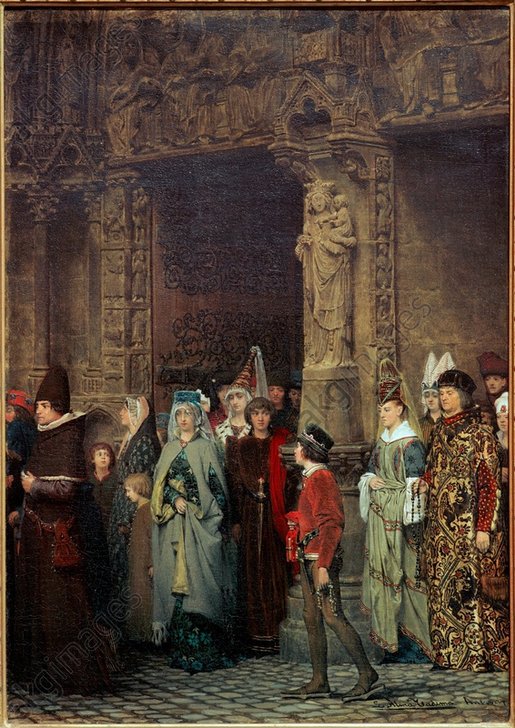


For a while the York family is safe in London and the Duke returns from abroad—now intent on claiming the throne. But the Queen, Margaret of Anjou, is determined that he will never supplant her young son and when Duke Richard heads north, hearing of unrest, he is lured into battle before the walls of Sandal castle and slain while his second son, Edmund, is murdered, age just seventeen.

Fearful for her youngest boys but cool-headed even in her grief, Cecily Neville sends them out of the country to Burgundy. Duke Phillip has agreed to their presence but is not overly enamoured of such controversial guests for he does not wish to seem partisan.  So Richard and George are confined to a remote castle partly under construction.

But then welcome news arrives— two great battles have been fought at Mortimer’s Cross and Towton, and their brother Edward, taking revenge for the deaths of their father and brother Edmund, has claimed the throne. The boys return to England as King’s brothers—and soon both are made Royal Dukes.

The Wheel of Fortune has turned again for Richard as he is sent away for knightly training at Middleham, one of the castles of Edward’s strongest supporter, Richard Neville, Earl of Warwick. There he meets friends who will become lifelong supporters—young Francis Lovell and Robert Percy. Yet when King Edward and Warwick fall out over the King’s secret bride, the commoner Elizabeth Woodville, unrest creeps into his life yet again….

The childhood of the boy who will grow to be King Richard III, told from his first-person perspective.


Prequel to the I, Richard Plantagenet series.
Kindle version 0.99 time-limited introductory offer!
THE ROAD FROM FOTHERINGHAY:


THE I, RICHARD PLANTAGENET SERIES:


J.P. Reedman

Born on the West Coast of Canada, J.P. Reedman now lives in the shadow of Stonehenge. A writer since the age of 5, when she wrote her first story about Cleopatra, she now write historical fiction and historical fantasy, with a little bit of general fantasy thrown into the mix. Favourite periods are medieval England, particularly the Wars of the Roses era, and prehistoric Britain. J.P.  also writes about figures associated with her hometown of Amesbury, such as Queen Eleanor of Provence, Eleanor of Brittany and the naughty nun Mary of Woodstock, all of whom were buried in Amesbury (and are now lost!) J.P’s I, Richard Plantagenet series about Richard III  has been called ‘a new Ricardian classic’, and in the future there will be an offshoot series about various members of the House of York.


#HistoricalFiction author, Mary Ann Bernal, is talking about the inspiration behind her fabulous new book— Crusader’s Path #HistoricalRomance @BritonandDane


An Author’s Inspiration
Crusader’s Path
By Mary Ann Bernal


In my ongoing interest in the human psyche and why people behave the way they do, I discovered most individuals react in the same way when coming in contact with a person who may or may not have a communicable disease.

When I had a bout of shingles a while back, I was fortunate – only one hand and wrist were affected, a few manageable lesions that did not spread, just five or six clusters lining one finger, easily covered with Band-Aids.

Shingles.

While speaking to several coworkers, I noticed their peculiar behavior the minute I said the word shingles. They stepped away – distancing themselves a few feet from where I stood as if my covered finger would contaminate them.

Of course, I was not contagious, but the fear emanating after hearing the word shingles seemed to set protective gears in motion, leaving as quickly as one could without appearing rude.

What immediately came to mind was how people with infectious diseases had been treated throughout the centuries.  The recent remake of Ben Hur in 2016 reminded me of Charleston Heston’s portrayal of Judah and how he interacted with his mother and sister, who had contracted the disease while in prison.

Ben-Hur (6/10) Movie CLIP - The Valley of the Lepers (1959)

Lewis Wallace - Ben-Hur: Wikimedia.


Throughout the years, a plethora of movies were made about the Crusades and leper warriors, such as King Baldwin IV of Jerusalem. The Order of Saint Lazarus of Jerusalem, a military order was established to care for the hospitalized lepers around 1119 AD.

Baldwin IV - The Leper King of Jerusalem - IT'S HISTORY

Hospitaller Order of Saint Lazarus of Jerusalem.

Remember Richard the Lionheart joining the Third Crusade to fight his nemesis, the notable Saladin? And don’t forget the Robin Hood movies which reference the famous outlaw’s experiences fighting the Infidel. Recognizable names and places because of Hollywood, all filmed with creative license meant to entertain and are not necessarily historically accurate.

However, in recent years, the atrocities of warfare have been articulated with documentaries and dramatic television series where the brutality of the age is showcased and not swept into the background. In Knightfall, we see a leper knight whose face is covered by a mask. Yes, there were warriors affected with the disease who fought valiantly during every campaign over the years.

But I wanted to go back to the beginning, to the First Crusade, to understand what drove the warriors of Christ to leave their homes, enduring untold hardships for a holy cause. It took years to reach the Holy Land, a feat not everyone accomplished, dying en route from disease, starvation, and in battle.

Creating a narrative set during the First Crusade satisfied a two-fold desire to discern the truth about life in such a turbulent era.


Lepers were shunned and, to this day, still bear the stigma for having the disease. Delving into the minds of human beings is fascinating because of the different perceptions. Where one sees a victim struck down by God, another sees an unfortunate soul, suffering from an infliction through no fault of their own.


And what of the reasoning behind the Crusades, and what mitigating factors drove the men and women to travel to an unknown land. The peasant class had no clue as to what the undertaking meant, never having ventured out of their village.

I wonder if Urban II would have started his quest to free the Holy Land from the Infidel if he knew his mission would set off a series of events that has transcended the centuries. In our modern era, there is still a holy war being fought in the Middle East. With the advances in warfare, all that has changed are the weapons. Battles are still being fought in the name of God, religious wars, man-made, making the assumption God wills it. In reality, the quest for power and wealth drives a primeval need to dominate the weak, worldwide dominion, reminiscent of the saying, only the strong will survive.

It took three years for the Princes’ Army to reach Jerusalem, where the remnants of a once-massive military force did what no one expected. The Christian flag flew above the tower of the Lord’s city, a hard-fought victory never to be repeated over the ensuing years.

As in Romeo and Juliet and the Outlander series, Crusader’s Path has more than one main character. The story takes an in-depth look at how leprosy and religious warfare affected the individual. Avielle, a commoner, conforms to the laws of the land, but her compassion for the afflicted grows because of her personal experience. Yet she must behave according to the mores of the time, and many of her decisions stem from having to live within those rules.

Etienne, on the other hand, defies accepted values, his status giving him license to do as he pleases. He casts everything aside as he follows his ducal lord, Robert, but he is not judged as Avielle would have been for the same infraction.

Whether or not you agree with their decisions reverts back to your perception of what is acceptable and what is not. Were the conditions and rules harsh in the Eleventh Century? Yes, they were. What would you have done in a similar situation? Can you feel empathy for Avielle and Etienne and even the ducal lord, Robert, whose selfishness fits his entitled persona? If you judge them according to the principles imposed in their century and not ours, would you be surprised by your verdict?


Crusader’s Path
By Mary Ann Bernal


From the sweeping hills of Argences to the port city of Cologne overlooking the River Rhine, Etienne and Avielle find themselves drawn by the need for redemption against the backdrop of the First Crusade.

Heeding the call of His Holiness, Urban II, to free the Holy Land from the infidel, Etienne follows Duke Robert of Normandy across the treacherous miles, braving sweltering heat and snow-covered mountain passes while en route to the Byzantine Empire.

Moved by Peter of Amiens’ charismatic rhetoric in the streets of the Holy Roman Empire, Avielle joins the humble army of pilgrims. Upon arrival in Mentz, the peasant Crusaders do the unthinkable, destroying the Jewish Community. Consumed with guilt, Avielle is determined to die fighting for Christ, assuring her place in Heaven.

Etienne and Avielle cross paths in Constantinople, where they commiserate over past misdeeds. A spark becomes a flame, but when Avielle contracts leprosy, Etienne makes a promise to God, offering to take the priest cowl in exchange for ridding Avielle of her affliction.

Will Etienne be true to his word if Avielle is cleansed of the contagion, or will he risk eternal damnation to be with the woman he loves?


Pick up your copy of
Crusader’s Path
Amazon

Mary Ann Bernal

Mary Ann Bernal attended Mercy College, Dobbs Ferry, NY, where she received a degree in Business Administration.  Her literary aspirations were ultimately realized when the first book of The Briton and the Dane novels was published in 2009.  In addition to writing historical fiction, Mary Ann has also authored a collection of contemporary short stories in the Scribbler Tales series. Her latest endeavor is a science fiction/fantasy novel entitled Planetary Wars  Rise of an Empire. Originally hailing from New York, Mary Ann now resides in Elkhorn, Nebraska.

Connect with Mary Ann: Website • Whispering Legends Press • Twitter.


-->

Tuesday, 5 May 2020

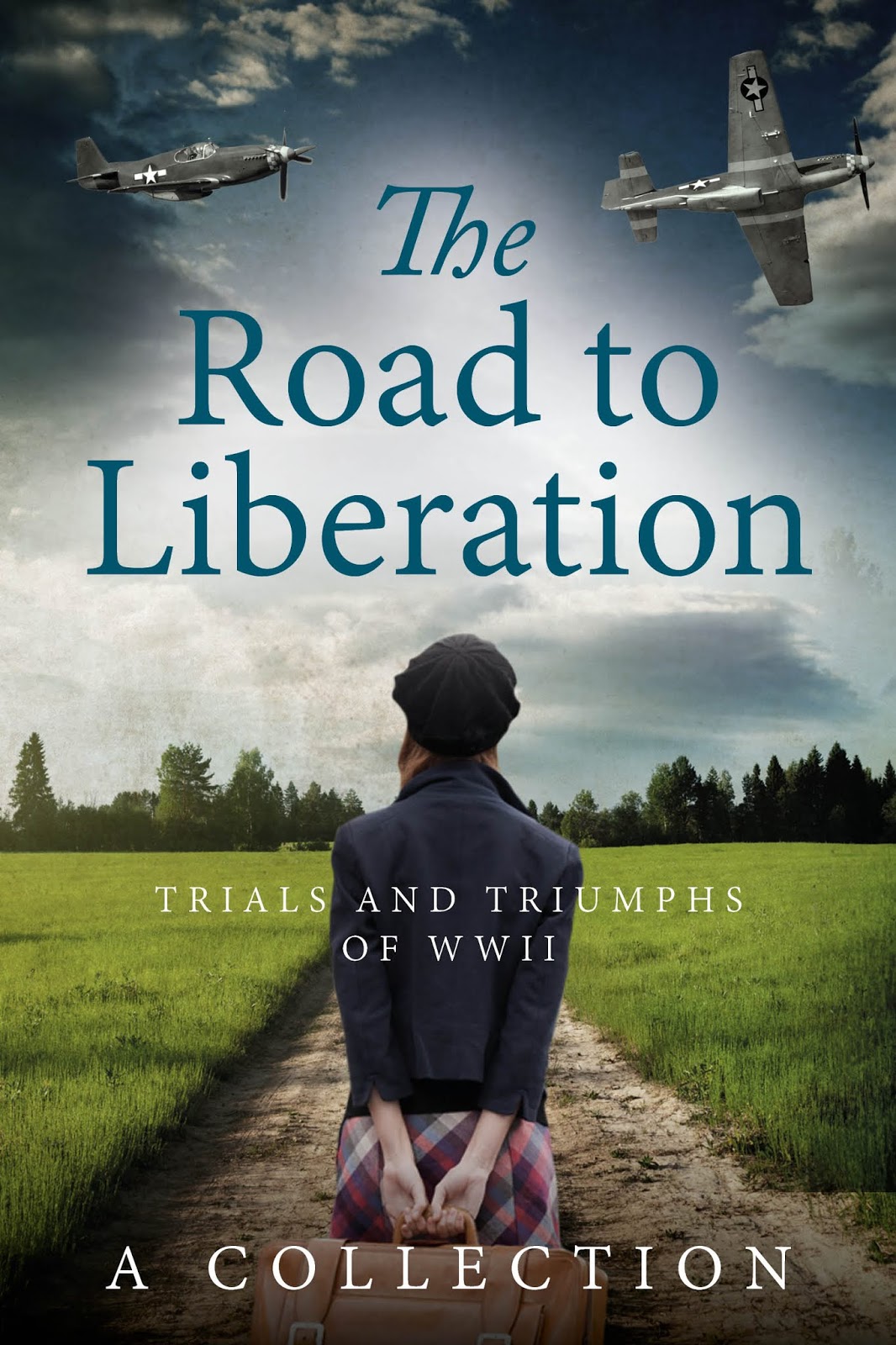
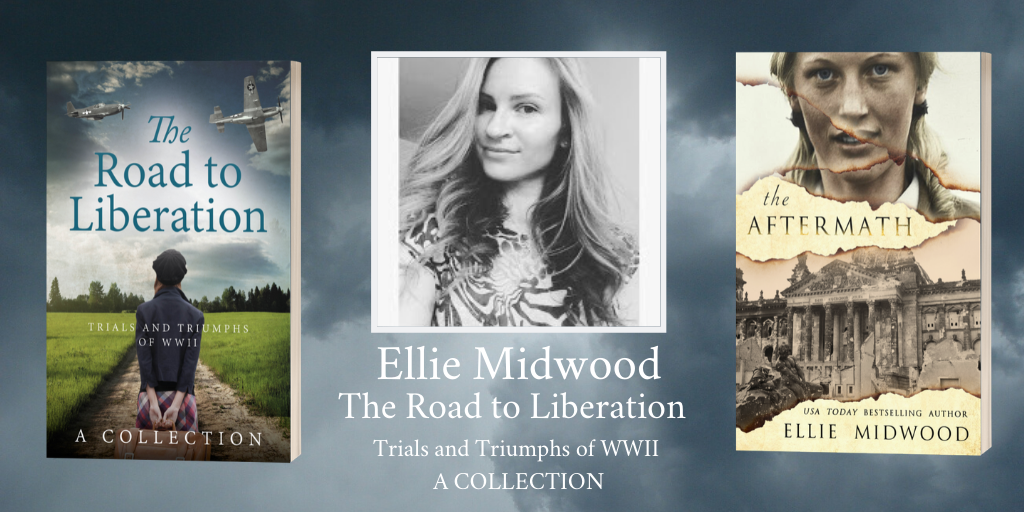
Blog Tour — The Road to Liberation: Trials and Triumphs of WWII , A Collection by Marion Kummerow, Marina Osipova, Rachel Wesson, JJ Toner, Ellie Midwood, and Chrystyna Lucyk-Berger.


The Coffee Pot Book Club
 Is Proud To Present…


The Road to Liberation: Trials and Triumphs of WWII
A Collection
By Marion Kummerow, Marina Osipova, Rachel Wesson, JJ Toner, Ellie Midwood, and Chrystyna Lucyk-Berger.


Riveting stories dedicated to celebrating the end of WWII.

From USA Today, international bestselling and award-winning authors comes a collection filled with courage, betrayal, hardships and, ultimately, victory over some of the most oppressive rulers the world has ever encountered.

By 1944, the Axis powers are fiercely holding on to their quickly shrinking territories.

The stakes are high—on both sides:

Liberators and oppressors face off in the final battles between good and evil. Only personal bravery and self-sacrifice will tip the scales when the world needs it most.

Read about a small child finding unexpected friends amidst the cruelty of the concentration camps, an Auschwitz survivor working to capture a senior member of the SS, the revolt of a domestic servant hunted by the enemy, a young Jewish girl in a desperate plan to escape the Gestapo, the chaos that confused underground resistance fighters in the Soviet Union, and the difficult lives of a British family made up of displaced children..

Stolen Childhood by Marion Kummerow
The Aftermath by Ellie Midwood
When's Mummy coming? by Rachel Wesson
Too Many Wolves in the Local Woods by Marina Osipova
Liberation Berlin by JJ Toner
Magda’s Mark by Chrystyna Lucyk-Berger


Pick up your copy of

The Road to Liberation: Trials and Triumphs of WWII


Marina Osipova


Marina Osipova was born in East Germany into a military family and grew up in Russia where she graduated from the Moscow State Institute of History and Archives. She also has a diploma as a German language translator from the Moscow State Institute of Foreign Languages. In Russia, she worked first in a scientific-technical institute as a translator then in a Government Ministry in the office of international relations, later for some Austrian firms. For seventeen years, she lived in the United States where she worked in a law firm. Eventually, she found her home in Austria. She is an award-winning author and a member of the Historical Novel Society.

Marion Kummerow


Marion Kummerow was born and raised in Germany, before she set out to "discover the world" and lived in various countries. In 1999 she returned to Germany and settled down in Munich where she's now living with her family.

After dipping her toes with non-fiction books, she finally tackled the project dear to her heart. UNRELENTING is the story about her grandparents, who belonged to the German resistance and fought against the Nazi regime. It's a book about resilience, love and the courage to stand up and do the right thing.

Rachel Wesson


Rachel Wesson is Irish born and bred. Drawn to reading from an early age, she started writing for publication a few years back. When she is not writing, Rachel likes to spend her time reading and playing with her three kids. Living in Dublin there are plenty of things to do, although the cowboys and Indians of her books rarely make an appearance. To chat with Rachel connect with her on Facebook - authorrachelwesson. To check out her newest releases sign up to her mailing list.


My background is in Mathematics and computing, but I have been writing full time since 2005. I write short stories and novels. My novels include the bestselling WW2 spy story 'The Black Orchestra', and its three sequels, 'The Wings of the Eagle', 'A Postcard from Hamburg', and 'The Gingerbread Spy'.
Many of my short stories have been published in mainstream magazines. Check out 'EGGS and Other Stories' - a collection of satirical SF stories. I was born in a cabbage patch in Ireland, and I still live here with my first wife, although a significant part of our extended family lives in Australia.

Ellie Midwood


Ellie Midwood is a USA Today bestselling and award-winning historical fiction author. She owes her interest in the history of the Second World War to her grandfather, Junior Sergeant in the 2nd Guards Tank Army of the First Belorussian Front, who began telling her about his experiences on the frontline when she was a young girl. Growing up, her interest in history only deepened and transformed from reading about the war to writing about it. After obtaining her BA in Linguistics, Ellie decided to make writing her full-time career and began working on her first full-length historical novel, "The Girl from Berlin." Ellie is continuously enriching her library with new research material and feeds her passion for WWII and Holocaust history by collecting rare memorabilia and documents.

In her free time, Ellie is a health-obsessed yoga enthusiast, neat freak, adventurer, Nazi Germany history expert, polyglot, philosopher, a proud Jew, and a doggie mama. Ellie lives in New York with her fiancé and their Chihuahua named Shark Bait.

Chrystyna Lucyk-Berger


Chrystyna Lucyk-Berger was born in Minnesota in 1969 and grew up in the culture-rich neighborhood of "Nordeast" Minneapolis. She started her writing career with short stories, travel narratives, worked as a journalist and then as a managing editor for a magazine publisher before jumping the editor's desk and pursuing her dreams of writing and traveling. In 2000, she moved to western Austria and established her own communications training company. In 2005, she self-published a historical narrative based on her relatives' personal histories and experiences in Ukraine during WWII. She has won several awards for her short stories and now primarily writes historical fiction. During a trip into northern Italy over the Reschen Pass, she stood on the edge of Reschen Lake and desperately wanted to understand how a 15th-century church tower ends up sticking out of the water. What stories were lying beneath? Some eight years later, she launched the "Reschen Valley" series with five books and a novella releasing between 2018 and 2021.
For more on Chrystyna, dive in at inktreks(dot)com.