


In "Marguerite: Hell Hath No Fury – The Story of Marguerite of Anjou", Judith Arnopp once again demonstrates her remarkable ability to breathe life into the most embattled figures of English history. Written with the sensitivity and narrative elegance one might expect from a storyteller of Arnopp’s calibre, this novel offers a portrait of Marguerite of Anjou that is both vivid and compelling, steeped in atmosphere yet driven by character.
Arnopp’s depiction of fifteenth-century England is nothing short of immersive. From the tense, faction-ridden atmosphere of Henry VI’s court to the battle-scarred landscapes that marked the bitter conflict between Lancaster and York, every scene feels grounded in authentic historical detail. Yet Arnopp avoids heavy exposition; instead, she weaves the political complexities and shifting allegiances seamlessly into the fabric of the story. The result is a setting that feels lived-in and immediate, offering readers both clarity and nuance without sacrificing narrative drive.
The story unfolds entirely through Marguerite’s eyes, allowing the reader to journey with her from the moment she arrives in England as a hopeful, wide-eyed fifteen-year-old bride. We witness her first faltering steps into queenship, the weight of expectation settling on her slender shoulders as she is crowned Queen of England and thrust into a world far more treacherous than she could have imagined. Arnopp guides us through Marguerite’s evolution with great sensitivity: from the uncertain young girl struggling to understand her pious husband, to the determined woman forced to navigate the brutal realities of civil war. By the time Marguerite finds herself a queen in exile—her husband incapacitated, then dead, possibly murdered; her beloved son slain; her cause shattered—the reader has walked every painful step with her. The transformation is profound, and Arnopp renders it with such emotional clarity that Marguerite’s final loneliness feels both inevitable and deeply moving.
King Henry VI is portrayed much as he appears in the historical record: a gentle, pious man whose temperament was far better suited to the cloister than the crown. Arnopp breathes remarkable life into him, capturing not only his saintly kindness but also the quiet tragedy of a man painfully unsuited to the brutal world in which he must rule. His insecurities, coupled with an innate inability to make firm decisions, leave him dangerously exposed to manipulation and attack—particularly from his Yorkist cousin and their ambitious faction. As his enemies press ever closer, his allies are targeted, and his position grows increasingly precarious. His utter bafflement at the idea that anyone might covet his crown—and his childlike wish that all parties might simply live in peace—underscores the depth of his naïvety. When his illness finally overwhelms him, and the realm finds itself effectively without a king, the vultures begin to circle. It is then that the burden falls squarely upon Marguerite to defend his legacy and safeguard the throne for their son.
Arnopp does not shy away from exploring the long-whispered rumour that Marguerite of Anjou had an affair with Edmund Beaufort, 2nd Duke of Somerset. In her hands, this is not a salacious subplot but a poignant and believable emotional thread. Somerset is everything Henry is not—charismatic, worldly, and passionate. Where Henry retreats into prayer and piety, Somerset would far rather be in Marguerite’s bed. His attentiveness and desire offer Marguerite the warmth, validation, and companionship she has been so painfully denied in her marriage. Arnopp handles their relationship with sensitivity, neither condemning nor romanticising it, but presenting it as the natural consequence of a lonely young queen seeking solace in a court where affection is scarce and danger ever present.
Although the fight for the crown is at the forefront of the novel, Arnopp never loses sight of the deeply human moments that define Marguerite’s journey. We see a young bride who dreams of a handsome, attentive king, only to discover the heartbreak of a husband whose thoughts drift to holier things. We witness a woman starved of affection, drawn into a dangerous seduction that offers her the warmth she so desperately craves. And, perhaps most poignantly, there is Marguerite, the mother, scolding her child for using a profanity he has been so desperate to use, even as the world collapses around them in the chaos of war. These intimate glimpses lend the narrative remarkable emotional depth, reminding us that behind the politics and the bloodshed stood a woman fiercely trying to navigate love, loyalty, and survival.
The horrors that these characters endure are almost unimaginable to modern readers. Arnopp does not soften the brutality of the cousins’ war; it is portrayed as the violent, relentless, and unforgiving struggle it truly was. Villages are razed, loyalties shattered, and noble families torn apart with chilling ease. Amidst this devastation stands Marguerite, desperate to protect her husband, her son, and the fragile Lancastrian cause that seems to slip further from her grasp with every passing season. Her determination is fierce, but it is laced with fear and heartbreak, for she is a mother fighting not just for a throne, but for the very survival of her child in a world consumed by bloodshed. Arnopp captures this desperation with striking authenticity, reminding us that behind every political manoeuvre and battlefield victory lay human lives pushed to the very brink.
Judith Arnopp’s storytelling is graceful, poignant, and rooted firmly in historical reality. Yet it is her emotional insight—her ability to step into the heart and mind of a woman repeatedly vilified by history—that makes this novel especially compelling. Readers will come away not only with a richer understanding of the period but with a renewed appreciation for Marguerite of Anjou’s courage, complexity, and indomitable spirit.
Yarde Book Promotions

Judith Arnopp
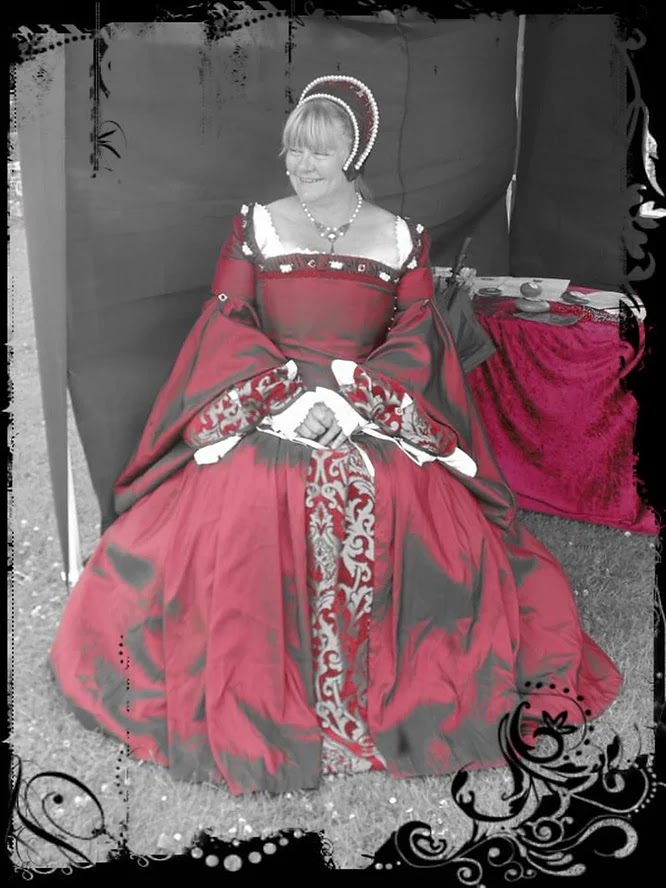
A lifelong history enthusiast and avid reader, Judith holds a BA in English/Creative writing and a Masters in Medieval Studies. She lives on the coast of West Wales where she writes both fiction and non-fiction. She is best known for her novels set in the Medieval and Tudor period, focussing on the perspective of historical women but recently she has written a trilogy from the perspective of Henry VIII himself. Judith is also a founder member of a re-enactment group called The Fyne Companye of Cambria which is when and why she began to experiment with sewing historical garments. She now makes clothes and accessories both for the group and others. She is not a professionally trained sewer but through trial, error and determination has learned how to make authentic looking, if not strictly historically accurate clothing. A non-fiction book about Tudor clothing, How to Dress like a Tudor, was published in 2023 by Pen and Sword. She runs a small seaside holiday let in Aberporth and when she has time for fun, likes to garden and restore antique doll’s houses. You can find her on most social media platforms.
Connect with Judith:

Oh my word, Mary Anne! I am in pieces! Thank you so very, very much for this wonderful review! I am going to bed a happy author!
ReplyDelete