Showing posts with label #Arthurian #history #KingArthur #Camleot. Show all posts

Tuesday, 20 June 2017

The Island of Albion ~ #History #kingarthur


The Island of Albion…

Britain, the best of islands, is situated in the Western Ocean, between France and Ireland. It stretches for eight hundred miles in length and two hundred in breadth. It provides in unfailing plenty everything that is suited to the use of human beings. It is abound in every mineral. It has broad fields and hillsides which are suitable for the most intensive farming and in which, because of the richness in soil, all kinds of crops are grown in their season. It also has wide open woodland which are field with every kind of game. Through its forest glades stretch pasture-land which provides the various feeding-stuffs needed by cattle, and there too grow flowers of ever hue which offer their honey to the flitting bees. At the foot of its windswept mountains it has meadows green with grass, beauty-spots where clear springs flow into shining streams which ripple gently and murmur of deep sleep to those lying on their banks…

Geoffrey of Monmouth
The History Of The Kings of Britain
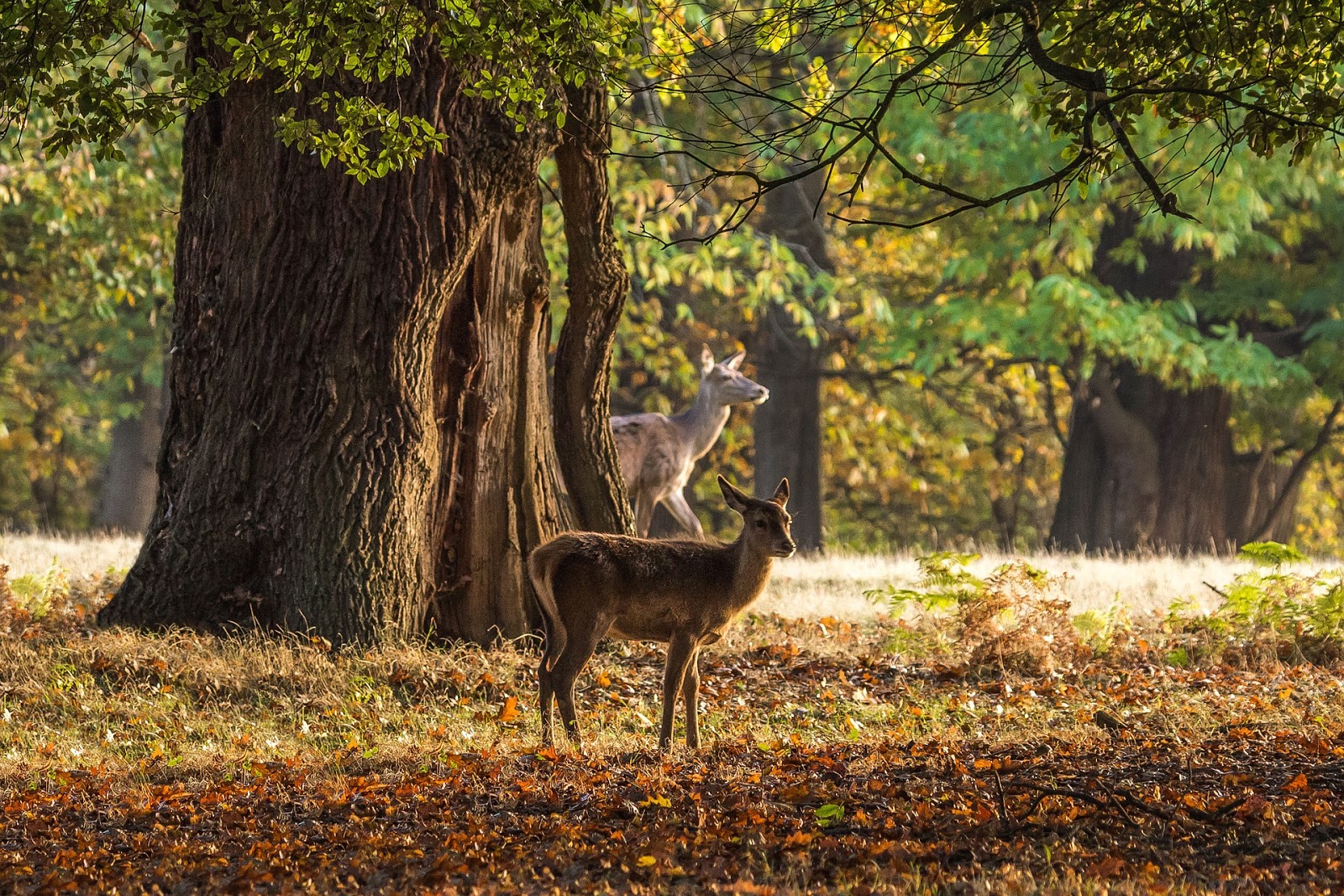


It is said that there are two sides to Britain, the first is what Geoffrey of Monmouth so elegantly describe in the opening of The History Of The Kings of Britain. Monmouth presents us with the reason so many crossed the sea and risked their lives to win a piece of this kingdom for themselves. Britain has always been a land that provides.

But as I said there are two sides to Britain and one is as fanciful as J. R. R. Tolkien's Middle Earth. There is hauntingly romantic feel that is out of reach but at the same time incredibly close.

Camelot. Camlann. Bardon Hill. Arthur.

Britain remembers her heroes. She doesn’t forget, and she doesn’t let us forget because some things cannot be forgotten.

I have been a little neglectful hunting mythology on this blog recently, and I don’t know about you but Arthur is calling me again and I think it is time I answered that call…

Buckle up. We are going for a ride.


  The Du Lac Chronicles series...


A generation after Arthur Pendragon ruled, Briton lies fragmented into warring kingdoms and principalities.

Eighteen-year-old Alden du Lac ruled the tiny kingdom of Cerniw. Now he half-hangs from a wooden pole, his back lashed into a mass of bloody welts exposed to the cold of a cruel winter night. He’s to be executed come daybreak—should he survive that long.

When Alden notices the shadowy figure approaching, he assumes death has come to end his pain. Instead, the daughter of his enemy, Cerdic of Wessex, frees and hides him, her motives unclear.

Annis has loved Alden since his ill-fated marriage to her Saxon cousin—a marriage that ended in blood and guilt—and she would give anything to protect him. Annis’s rescue of Alden traps them between a brutal Saxon king and Alden’s remaining allies. Meanwhile, unknown forces are carefully manipulating the ruins of Arthur’s legacy.

Links for Purchase


Read for #free with
subscription.


Thursday, 18 May 2017

King Arthur is awesome ~ he pulled a sword out of the stone after all! #Arthurian #kingarthur


“Whoso Pulleth Out This Sword of this Stone and Anvil,
is Rightwise King Born of all England”
Thomas Malory


What a romantic thought. No one can take the sword from the stone unless he is the rightful heir to the throne. It beats spending hours looking at a patent of nobility and then going to war if you don't agree with the outcome.

Arthur, the unlikely warrior, if Disney is to be believed, pulls the said sword from the stone. Yes!


Arthur is the King. Fantastic. But it gets better because Arthur is the best King in the history of Kings. He is the best King in the future of Kings. No on can be better him. This is it. He is it. Hazar!


 "What right do you have to the throne of England?"

"I pulled this sword out of a stone."

 "Oh, well, if that is the case..."


Arthur wasn't just a king. He was a king with a vision. Perhaps his vision was ahead of its time, or maybe it was before it. It is so confusing. He certainly wouldn't fit in nowadays, would he? Can you imagine…?


"Good man, I need a Round Table, a large one. And find me some Knights, the noble kind."
"The noble kind, Sire?"
"Yes. The kind who ride around the countryside and rescue maidens, battle dragons and do other noble things."
"Right, I'll just get on my bike then."
"You do that good man. I shall wait here in my castle that I have named Camelot."


Arthur believes in equality. He has a Round Table commissioned for goodness sake. He wants his knights to have a say in how the country is run. It is like parliament, only better, because the Knights are trying to outdo each other in chivalry. They all want to be seen as heroic and honourable. There is no corruption at Arthur's court. No backhanders. No claiming for expenses, unless it involves the Armourer because we all know how much he charges. Oh, and don't forget the livery of the horses, that comes to a pretty penny too. But apart from that...Oh hang on, we are forgetting about the Christmas parties ~ they need to be paid for. But perhaps we can get the Green Knight to pay for it this year. He did make a heck of a mess of the Hall last year with his ridiculous Beheading Game.


And so Arthur sat down with his knights. Life was perfect. There was no scandal, nothing for the Sun to get their hands on and put on the front page for everyone to read over their cup of tea at breakfast. Everyone is happy. The country is at peace. Those pesky Saxon's have been put in their place. Everything as Lego would say, "is awesome!"


Oh come on, this isn't much of a story.


Bring on the drama. Bring on the war.


Maybe Arthur's golden court is not that different after all. I mean Arthur's best friend ran off with his wife. That caused a bit of a scandal. And then there was the dramatic rescue were Lancelot rode into the courtyard like an avenging angel and rescued Guinevere from the pyre ~ as if Arthur was really going to let his wife go up in flames ~ Lancelot should have had more faith. And to make matters worse, while Arthur is away trying to restore his honour by going to war with Lancelot, his nephew, Mordred takes control of the kingdom.


Stop! Rewind back to the beginning....


That was the abbreviated and rather tongue-in-cheek version of King Arthur's life. It was the gilded version of Arthur's life. Let's be honest, the fictitious version of Arthur's life.


So how did this fantasy come about?

Arthur's story is so ingrained in the collective imagination of a nation that we believe what we are told. In fact when Geoffrey of Monmouth wrote his great work in the 12th Century, his every word was taken as fact. Well, when I say that, not by all. The 12th-century historian, William of Newburgh wrote.


"…It is quite clear that everything this man wrote about Arthur and his successors, or indeed about his predecessors from Vortigern onwards, was made up, partly by himself and partly by others…"


But for the most part, Newburgh was ignored. Our ancestors liked this version of events, and you know what, so do we, whether we like to admit it or not. Arthur wouldn't be the same without his Round Table and his Knights. We want Arthur to be this formidable warrior but also a genuinely nice person. He is the best. No, he is better than best, he is...I can't think of a word...ummm...He is just awesome!

Monday, 27 March 2017

Researching The Du Lac Chronicles ~ #Cornwall #amwriting #Arthurian


“You don’t need another book on the Saxons and the Celts.”

"I could argue with you, but I won't. What I do need to do is head back to Cornwall!"


Writing isn’t just about locking yourself in a room, sitting down in front of a computer and typing a story — if only it were that easy. No, that is not how it works at all because at some point a writer, no matter what genre they write in, is going to have to do some research. I spend more time researching that I do writing and sometimes it is about really obscure things ~ the history of cobblestones is one thing that immediately comes to my mind. I am still waiting on that pub quiz! But, sometimes, I find, I have to get out of the house and actually visit the places that I am describing. I am lucky because I write about Britain in the Dark Ages and I live in Britain — England to be exact.

Book 3 of The Du Lac Chronicles, which I am currently writing, is, for the most part, set in Dark Age Cornwall. I love Cornwall, I mean who doesn't? I had come to a point in the story where I really wanted to go back to Cornwall so that I could soak up the atmosphere.

"It is for work purposes," I told my husband. 

I don't think he was fooled. I love Cornwall. Any excuse to visit. 

So I packed the kids, and the husband, in the car and off we went to Tintagel. Tintagel, it is said, was where King Arthur was conceived. Of course, with all things Arthur, it most likely isn’t, but Geoffrey of Monmouth said it was, so it must be right…?!


This sculpture of Arthur is a whopping 8 feet — maybe Briton really was once ruled by giants. Who knew?!
Anyway, I thought I would share some pictures. Tintagel is quite the tourist attraction, so we got there for opening, and although there were a few people around, it wasn’t too busy. It did mean we had Merlin’s Cave to ourselves for at least five minutes!!


Isn't it great?! At high-tide the cave fills with water.


Despite having an opening either end of the cave, it is still pretty dark and I must admit, I turned my phones torch on because yes, that is right, I don't like to be in a cave in the pitch dark!


The beach, where the cave can be found, is equally impressive!


Then we braved the steps up the castle itself. There are a many steps, be warned, they are not even, but the higher you climb the greater the views are!


I felt the need for a black horse so I could go galloping across the cliff face like Poldark does!!

I came back feeling refreshed and ready to crack on with my story. But I think I may need another trip down to Cornwall soon. Bodmin Moor is calling me!!!

The Du Lac Chronicles


“Chivalry is hanging in by its fingernails and treachery is in the air…”
Tony Riches ~ author of The Tudor Trilogy


“If you’re a fan of Game of Thrones and/or The Vikings, you’ll love the back-stabbing/political jockeying in The Du Lac Devil.”

N.N.Light


The Du Lac Chronicles is set a generation after the death of King Arthur, and it follows the fortunes and misfortunes of Lancelot du Lac's sons

Links for Purchase


Monday, 9 January 2017

King Arthur's Camelot has been found...Again?! #Arthurian #history

You may have heard in the news recently that a retired professor, Peter Field, has claimed that he has found the location of King Arthur's Camelot.

I have been holding off blogging about this, as I needed time to collect my thoughts.

There are so many, let us call them, "Arthurian Experts," who are convinced that they have found the real King Arthur. Sometimes there argument seems very compelling at others time, not so much. I have spent many hours studying the life of Arthur, and I have my own conclusions. But then I saw this headline in the Independent...


I sighed very deeply and might have muttered the words "not again." But newspapers are all about punchy headlines that catch the reader’s attention. So I read the article, and now I am in two minds about it. Not the Camelot reference, that is ridiculous, there was no Camelot and that was just the paper trying to catch you eye, but maybe, just maybe, Professor Field is on to something.


Let's forget about the latest’s findings for a minute and concentrate on Arthur. What do we really know about him?

"A wild boar's fury was Bleiddig ab Eli...
But he was not Arthur, and he fed
Black ravens on Catraeth's wall."
Aneirin, Y Gododdin (c. 6th century)

The very first mention of Arthur was in a 6th Century poem entitled Y Gododdin. What we can surmise from this poem was that Arthur was a great warrior. He is being used as a comparison. Bleidddig ab Eli was a fierce warrior, but he was not Arthur.


Gildas, in his damning work, "On the Ruin and Conquest of Britain," does not mention Arthur, although he does mention a great victory over the Saxons by the Celts at Badon Hill.

Let's fast forward to the 9th Century. Nennius, a Celtic Chronicler, talks of a great commander called Arthur.  Nennuis also gave us the 12 famous battles of Arthur. These Battles took him all over the kingdom of Briton and he fought like a warrior poet. Let’s take a quick look at the location of those battles...

"The first battle was at the mouth of the river called Glein"
 
This where it gets a little tricky because time has a habit of changing things. Place names come and go. There are two River Glens — one in Northumbria and one in Lincolnshire. Which one could it be?

River Glen ~ Lincolnshire


"The second, the third, the fourth and the fifth were on another river, called the Dubglas, which is in the region of Linnuis"

 Linnius is in the district of Lindsey. The word Linnius comes from the Celtic name for an island, which is most certainly could have been because the Fens on the Witham were not drained back then. But then again, Dubglas means blackwater, that would put us in Scotland by Loch Lomond.

Black Water ~ Scotland


"The sixth battle was on the river called Bassas"

This is anyone’s guess. Could this be in Nottingham or Glasgow, Shropshire or Hampshire. Pick a county and pick a country.

The seventh battle was in the Caledonian Forest, that is, the Battle of Celidon Coit"

The seventh battlefield site is identified as being Caledonian Forest in Scotland. Although dear old Geoffrey of Monmouth suggested it was fought in Lincoln.

Caledonian Forest in Scotland


"The eighth battle was in Guinnion fort"

There are so many probably sights for this battle. But I tend to side with the southern Scotland theory. 

"The ninth battle was in the City of the Legion"

Legion is in Chester, which is in the west of Briton and away from any advancing Saxons. What is Arthur doing there? But hang on, the Irish, it is said, had landed in the Mercy and had attacked Chester. It seems it wasn’t just the Saxons that Arthur was fighting.

"The tenth battle was on the bank of the river called Tribruit"

Back to Scotland we go and we should look to the River Frew at Stirling. Or… how about the Severn at Gloucester, or the Eden at Carlisle or how about the River Ribble in Lancashire? Pick a river.

"The eleventh battle was on the hill called Agned"

Edinburgh is the preferred choice.

Edinburgh Castle

"The twelfth battle was on Badon Hill…”

Liddington Castle in Swindon is a contender. It certainly falls into the right time period and the village at the foot of the fort is called Badbury. Monmouth suggested Bath. But there is also Bradbury Rings in Dorset. Or how about Solsbury Hill, Somerset?
Liddington Castle

Nennuis gives us more question than answers. But one thing is for certain. Nennius states that.

"Arthur fought against the Saxons alongside the King of the Britons but he himself was the leader in the battles."

From this we can deduce that Arthur was never a king. He was a warrior. A great one. He was so good that others were being compared to him, but no one could match him, "But he was not Arthur…"


Did Arthur stop the Saxon invasion, for a few years at least? I think he did. According to the Annales of Cambriae (c. 995), Arthur died at the Battle of Camluan (Camlann) along with Mordred. After that, the poets and the Bards got hold of him. And when Geoffrey of Monmouth wrote his History of the Kings of Briton, Arthur, the warrior became King Arthur, the man that we are so familiar with.

Do I think that Professors Fields has found “Camelot.” That’s a tough one, I would have see his thesis on the subject before I made a decision. It is an interesting idea though.