Showing posts with label #historical. Show all posts

Wednesday, 23 March 2016

Guest Post - "Author's Inspirations" Eric Schumacher @DarkAgeScribe

Today I welcome fellow author, Eric Schumacher to my blog to talk about the inspirations behind his latest book, God's Hammer.


It is 935 A.D. and the North is in turmoil. King Harald Fairhair has died, leaving the High Seat of the realm to his murderous son, Erik Bloodaxe. To solidify his claim, Erik ruthlessly disposes of all claimants to his throne save one: his youngest brother Hakon. Erik's surviving enemies send a ship to Wessex, where Hakon is being fostered in the Christian court of King Athelstan. Unable to avoid his fate, Hakon returns to the Viking North to face his brother and claim his birthright. Armed with his dream of becoming the first Christian king of his father's realm, yet confronted with the limitations of his youth and the hostility of the Northmen he would rule, Hakon soon learns that victory might come only by sacrificing that which he holds most dear.

***

 How much would you sacrifice to rule a kingdom?

That is the central question that Hakon Haraldsson must answer in God’s Hammer. It is not an atypical question for the Dark Ages. There are countless stories of warlords and kings dying in their pursuit of the throne, or dying to protect it. Yet Hakon’s story stuck a cord with me because Hakon was not the typical Viking leader.

According to Heimskringla (Snorre Sturlason’s “The Lives of the Norse Kings”), Hakon Haraldsson was born around 920 A.D in the west of modern day Norway, the youngest son of an aging Harald Fairhair, who at that time was the most powerful king in the North. Hakon’s mother, Thora Mostertang, was a “servant-maid” of good lineage, though it is unclear whether she was ever married to Harald. When Hakon was roughly eight years old, his father sent him to be fostered in the Wessex court of King Athelstan, who ruled most of what was becoming England. While fostering was commonplace among nobility, just why Hakon was sent there and not to another nobleman’s home in the North is a mystery. It is also unclear why Athelstan would accept to foster a bastard, if indeed Hakon was a bastard child. Regardless, King Athelstan did accept the responsibility and raised Hakon in the Christian faith.


Before King Harald died, he gave the High Seat of the realm to his son Erik. In the sagas he is called Erik Bloodaxe, and by all accounts, he lived up to his name. In short order, Erik killed off two of his brothers to secure his grip on the realm. Fearing for their safety, Erik’s enemies sent for Hakon, the only remaining brother with any claim to the High Seat. This much we know from historical texts.

Even if marginally true, Hakon’s story has so many of the elements of the great sagas – intrigue, bloodlust, fratricide, sibling warfare, religious fervor – yet is also filled with unanswered questions. How could a Christian boy gain enough support to rival his brother? Who supported him in his efforts and why? What did he have to sacrifice to succeed? The historical texts provide few answers, which gave me the opportunity to dream up a plausible reality.

I won’t spoil the ending, but I will say this: Hakon’s story is the tale of kings and armies, chieftains and battles, Christians and “pagans” – the gritty stuff of legend and truth as seen from the eyes of a boy who would be king. Yet God’s Hammer is just the beginning of Hakon’s journey.
 

  Where can I buy this fabulous book?
 
 Amazon US    Amazon UK 


About the author.
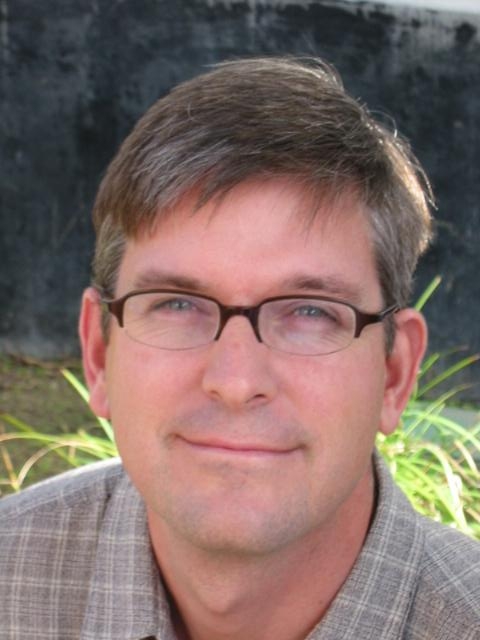
Eric Schumacher was born and raised in Los Angeles with an inexplicable passion for Dark Age history and writing. As a 20-year veteran of PR, marketing and copywriting, Eric has told the story of numerous companies, products and individuals. God's Hammer is his first novel. For more information on his recent endeavors, follow him at @DarkAgeScribe or here: http://amzn.to/20TAJUG.
 

Wednesday, 2 March 2016

Guest Post - author Michael E. Wills, talks of everything viking! @MWillsofSarum


Today I have the pleasure of welcoming fellow author, Michael E Wills, onto my blog.
Many years ago, when I was working as a teacher in Sweden, I had the good fortune to buy an old wooden manor house beside a lake, north of Uppsala. I say good fortune, but in fact it was extremely dilapidated and repairs required not only all my spare time, but every krona I had to make it habitable.
The rumour in the hamlet was that the house was one of several, which through the centuries, had been built on the site of a monastery. The extensive vaulted cellars under the house seemed to support this possibility. To my eternal regret, I never had time to research the history of the building. However, the existence of the cellars did make me aware that I was living on an ancient site. This awareness was heightened when I discovered that not far away, on the other side of the shallow, small lake, were the remains of a castle. Why would anyone build a fortress by a small landlocked lake? Who lived there? How old was it? My fascination with Scandinavian history was sparked and has remained with me ever since. Eventually, my attention focused on the Viking era. I read extensively on the subject and took every opportunity to visit historical sites and museums. I recorded much of my research in diaries and vowed that one day I would use it to write a book.
It was many years before I was able to fulfil my ambition to write about the Vikings, but with family now grown up and a move into semi-retirement, in 2009 I got my chance. I was working in Weymouth that summer and became aware of rumours in the town, that the men working on the building of a relief road, in preparation for the 2012 Olympic sailing events at Portland, had made a gruesome discovery of headless skeletons on the top of the ridgeway. I followed events closely and was thrilled when Oxford Archaeology confirmed that the remains were those of Vikings who had been executed between the years 910 and 1030. What had happened? Who were they? Who had killed them? This was an absolute gift for a novelist, there had to be a story here. My interest was heightened when further research of the bones revealed that at least one of the victims had been born north of the Arctic Circle. Who lived that far north in the tenth century and how on earth had they ended up in a shallow grave in Dorset?
I decided that in order to write a book about what had become known as the Ridgeway Skeletons, I would need to do a great deal of research. As well as reading everything I could find on Viking activity on the Dorset coast, I decided to undertake a voyage in my 30 foot sailing boat to Scandinavia, to get a feel for what the journey was actually like, storms and all. A further strand in the research was a visit to Lapland to learn the history of the Sami and to try to identify whether any of them travelled with the Vikings.
Many hundreds of miles later, I published my novel, “Finn’s Fate”. The story follows three brothers from the north of Sweden who in their search for a better life, join Danish Vikings on a raid to England. And no, they don’t all get killed in Dorset! This book was followed two years later with a sequel, Three Kings, One Throne, which tells the story of Harald Hardrada, the Norwegian Viking who nearly succeeded in taking the crown of England.
More recently, I have become interested in telling children stories about the Vikings and I embarked on writing a trilogy of books for 8 to 13 year-olds. The series is called Children of the Chieftain. The first two books, “Betrayed”, (Longlisted for the 2016 HNS Indie Award), and “Banished” are now available. 
And why was the fortress built by the side of a landlocked Lake? The answer, I discovered in the research for Finn’s Fate, was that since the tenth century, the land in parts of Sweden has risen up to ten metres in height. Streams and rivers have disappeared or become shallow and in the case of the castle, it had once guarded a major waterway into central Sweden, a waterway which has become a shallow lake.

Where can I buy these fabulous books?
http://www.michaelwills.eu/buy-books/

 About the author. 
Michael E. Wills was born on the Isle of Wight, UK, and educated at the Priory Boys School and Carisbrooke Grammar. He trained as a teacher at St Peter’s College, Saltley, Birmingham, before working at a secondary school in Kent for two years.

After re-training to become a teacher of English as a Foreign Language he worked in Sweden for thirteen years. During this period, he wrote several English language teaching books. On returning to the UK in 1979, Michael and his wife started a language school in Salisbury, which received accreditation by the British Council in 1983. The school was sold to International House in 2006.
Today, Michael works part-time as Ombudsman for English UK, the national association of English language providers. Although a lot of his spare time is spent with grandchildren, he also has a wide range of interests including researching for future books, writing, playing the guitar, carpentry and electronics. He spends at least two months a year sailing his boat which is currently in Scandinavia.

Contacts : www.michaelwills.eu